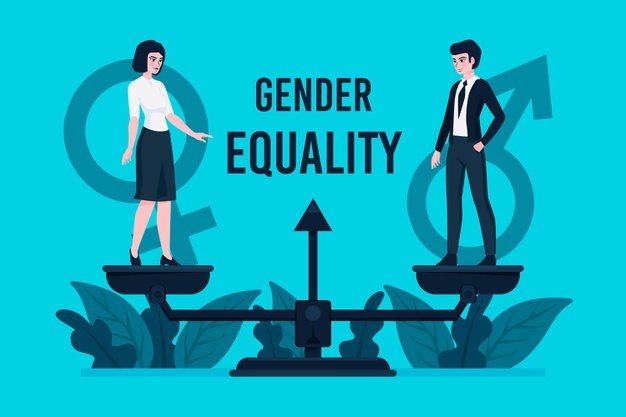
Have you ever wondered why women continue to be underrepresented in leadership roles, politics, and even the economic sphere, despite the fact that women dominate the globe? Gender equality is still a vital problem in today’s culture, having been a subject of debate and concern for many years.
There is, therefore, a need to take collaborative social action to achieve gender equality, seeing that it is not a task that can be completed by one organization or individual. Women have historically experienced systematic marginalization and exclusion from a variety of life domains, such as work, politics, and education.
Throughout its lengthy and illustrious history, the fight for women’s rights and gender equality has witnessed both major defeats and victories. The first women’s rights convention, held in New York in 1848, was one of the turning points in the struggle for gender equality.
This conference, which was organised by activists like Lucretia Mott and Elizabeth Cady Stanton, signalled the start of a concerted attempt to address the injustice and prejudice that women experienced. The Declaration of Sentiments, which called for women to have the right to vote and other fundamental rights, was the outcome, and it set the stage for further activism.
One example of the effectiveness of collective social action is the suffrage campaign, which gained grip in the late 19th and early 20th centuries. Women from many walks of life and origins branded together and, after much perseverance, succeeded in uniting to demand their right to vote.
Another historical example of collective action for gender equality is the second wave of feminism, which emerged in the 1960s and 1970s. Feminist activists such as Betty Friedan, Gloria Steinem, and Shirley Chisholm worked to address various issues, including reproductive rights, discrimination at the workplace, and domestic violence.
Their efforts resulted in significant legislative changes, including the prohibition of gender discrimination in education and the legalization of abortion in the United States. Gender equality is still a comprehensive goal in many parts of the world, despite past progress. There are still many issues that need to be resolved, and doing so calls for collective global social action.
In the field of economics, disparities in economic opportunities and wage gaps based on gender still impede women’s advancement. Despite notable progress, women’s average income remains lower than that of men in the workforce.
Promoting equal pay and providing opportunities for women in traditionally male-dominated fields require concerted social action.
Moreover, Gender-based violence remains a pervasive global issue. Efforts to combat violence against women, such as the “MeToo movement”, demonstrate the power of collective voices in exposing and addressing these injustices.
Additionally, women continue to be underrepresented in leadership, business, and politics. Collective social action can support inclusive decision-making and assist in removing obstacles that prevent women from taking the lead in these domains.
Furthermore, deep-seated cultural and societal norms often perpetuate gender inequality. Changing these norms requires a collective shift in attitudes and values, driven by grassroots movements and advocacy.
Women are also often discriminated against in healthcare and education, which impedes their opportunities to lead in society. Resolving these disparities requires collective action by individuals, civil society, the government, and stakeholders.
Positively, there have been notable advancements made in the cause of gender equality. Numerous nations have enacted laws and regulations aimed at addressing gender differences in a range of domains, such as political engagement, work, and education.
The Sustainable Development Goals, which include a specific goal (goal 5) to achieve gender equality and empower all women and girls by 2030, were adopted by the UN, which has also played a significant role.
We cannot underestimate the importance of promoting collective action to ensure gender equality. Recent research and case studies provide insights into the effectiveness of joint social action in promoting gender equality. Here are a few examples:
Iceland’s Gender Equality Strategy: Iceland is often cited as a leader in gender equality. Their government, in collaboration with civil society organizations, implemented a comprehensive Gender Equality Strategy that includes measures to close the gender pay gap and promote women’s participation in politics.
This strategy demonstrates the impact of a coordinated approach involving government, NGOs, and the private sector. Moreover, the Women’s Marches that took place around the world in the aftermath of the 2016 U.S. presidential election are a contemporary example of joint social action.
These marches brought together millions of people to advocate for a range of women’s rights issues, including reproductive rights, healthcare, and gender-based violence. Furthermore, the “HeForShe” campaign, which was started by UN Women, encouraged boys and men to advocate for gender equality.
It has gained support from male leaders and celebrities all across the world and highlights how important it is for everyone to get involved in the struggle for women’s rights. Research has shown that collaborative efforts involving governments, civil society, and the private sector are more likely to produce lasting change.
Gender equality is not just a women’s issue; it requires the active involvement of all members of society. To continue making progress, several key strategies are essential:
1. Education and Awareness: Raising awareness about the importance of gender equality and educating the public about its benefits are crucial. Schools, media, and community organizations play vital roles in this regard.
2. Policy and Legal Reforms: Governments must enact and enforce laws that promote gender equality. This includes legislation addressing pay equity, parental leave, and protection against discrimination and violence.
3. Support for Grassroots Movements: Grassroots organizations and activists often lead the way in advocating for gender equality. These groups should receive support and recognition for their work.
4. Male Engagement: Engaging men and boys as allies in the fight for gender equality is crucial. Men can actively challenge harmful stereotypes and behaviours that perpetuate gender inequality.
5. Economic Empowerment: Promoting women’s economic empowerment through initiatives such as microfinance, entrepreneurship support, and vocational training can have a significant impact.
6. Mentorship and Leadership Development: Encouraging women to pursue leadership roles and providing mentorship opportunities can help overcome barriers to women’s advancement.
In view of these, the First International Conference on Gender Equality (ICGE) in achieving the Goal 5 of the SDG goals which seeks to bring together experts, advocates, government, civil society organisations, activists, and other stakeholders from around the world in Accra, Ghana-West Africa to discuss and promote gender equality is being staged on theme: “Building Bridges: Charting the Course for Gender Equality and Achieving SDG 5 in Developing Economies”.
The conference seeks to provide a platform for knowledge sharing and dialogue on gender equality issues in developing economies, identify key challenges and gaps in achieving gender equality, and help develop strategies to address them, among other objectives.
The much-anticipated event is being initiated by I Believe Global Women’s Empowerment ‘IBGWE’ Foundation, a reputable non-profit organization with the support of the Ministry of Gender and Children and Social Protection, the National Development Planning Commission (NDPC) Ghana CSOs Platform on SDGs among other partners is expected to bring a Revolutionary Change to Ghana as far as the promotion of Gender Equality in Ghana and beyond is concerned.
The 1st International Conference on Gender Equality (ICGE) in Ghana is scheduled to take place at the CEDI Conference Room, University of Ghana, Legon, Accra, Ghana, on November 24–25, 2023, starting from 10 a.m.–5 p.m. each day.
The Human Rights Reporters Ghana (HRRG), an internationally recognised organization known for its enormous effort in advocacy across the globe, is among the key stakeholders who will grace the occasion to promote gender equality and ensure equal rights for all.
Promoting gender equality is an intricate and continuous initiative that demands not only individual commitment but also cooperative social action.
The sense of urgency for securing gender parity is recognized globally, making it a priority on global development agendas (UN Women, 2020).
Encouraging joint social action in this regard positions every member of society as an active participant in the fight for gender equality.
This shared responsibility and unified vision create an environment for awareness and understanding, dismantling the barriers of discrimination.
The multifaceted nature of gender issues calls for comprehensive and collaborative response strategies.
By involving all sectors of society in these strategies, we can address the systemic, institutional, and individual aspects of gender inequality (World Health Organization, 2019).
The urgent call to action for achieving gender equality necessitates it becoming a collective responsibility for all rather than a battle fought by a marginalized section.
The United Nations has identified gender equality as a pivotal piece of its sustainable development goals, recognizing that gender equality is vital not only from a human rights perspective but also for economic, social, and political progress to occur (United Nations, 2015).
Inequality can stifle potential and curtail opportunities, hence it impedes overall human development and progress.
Conversely, societies that embrace gender equality generally demonstrate higher growth rates, stronger developmental outcomes, and superior socioeconomic indexes.
To achieve gender equality, the collective responsibility should start from homes and educational institutions, where values are inculcated among younger generations.
Education plays a major role, in arming the young with knowledge about gender bias, discrimination, and stigmatization and teaching them to reject these values (World Bank Group, 2018).
They should be taught about equality, given the task of detecting biases, and empowered to prevent and address gender prejudice.
Corporations and workplaces are another significant area where gender equality should be pursued. Vehemently striving for equal pay, promoting and providing equal opportunities for women, eradicating discriminatory practices, and addressing sexual harassment are the responsibilities of every organization (European Institute for Gender Equality, 2020).
Employers have a leading role in fostering gender equality not just within their organizations but in society at large by creating platforms for discussions and enacting fair and balanced organizational policies.
Policymakers themselves have a vital role to play. They should aim to introduce laws and policies that promote gender balance, diligently enforce existing legislation, and ensure sanctions for violations (OECD, 2020).
Civil society and the media also have a crucial role – influencing public opinion, challenging stereotypes, and advocating changes favouring gender equality.
To achieve gender equality, it is necessary for every arm of society – the individual, the home, the school, the workplace, and the state – to shoulder the responsibility.
The journey towards making gender equality our lived reality requires us to challenge and dismantle entrenched biases persisting in societal structures.
It will need progressively changing thought patterns, attitudes, and cultural norms, fuelled by the collective contribution and concerted efforts of every section of society.
Thus, let us remember- gender equality is not just the fight of those who face inequality. It is the collective duty of every individual, institution, and nation.
Only when we all align our thoughts and actions towards the goal of equality, can we hope to make gender equality a universal reality.
In conclusion, although the journey towards achieving complete gender equality may seem arduous, collective social action serves as a beacon, paving the path and dispelling the shadows of entrenched biases.
The effort truly is the sum of all parts, and collective action underpins its success. Historical studies demonstrate the power of collective action in driving change, while recent research and case studies reveal the progress made and the challenges that remain.
Achieving gender equality requires a combination of legislative reforms, cultural shifts, and collaborative efforts from governments, civil society, and individuals.
As we move forward, it is crucial to recognize that gender equality is not just a women’s issue but a fundamental human rights issue that benefits everyone in society. Only through joint social action can we hope to create a world where gender equality is a reality for all.
*******
The writer is a gender equality advocate, staunch human rights activist, National SDGs Champion and Founder/Executive Director of Human Rights Reporters Ghana (HRRG).
DISCLAIMER: The Views, Comments, Opinions, Contributions and Statements made by Readers and Contributors on this platform do not necessarily represent the views or policy of Multimedia Group Limited.
- President Commissions 36.5 Million Dollars Hospital In The Tain District
- You Will Not Go Free For Killing An Hard Working MP – Akufo-Addo To MP’s Killer
- I Will Lead You To Victory – Ato Forson Assures NDC Supporters
Visit Our Social Media for More
About Author