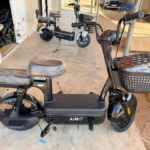
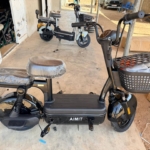
At dawn in Bawku, the streets are unusually quiet. The roar of motorbikes, once the heartbeat of the town, is gone. In its place, a soft humming fills the air. I walked past the market and watched a woman glide past on her electric bicycle, her goods tied neatly at the back.
“For me, this bicycle saved my work,” she says.
In this conflict-affected town in Ghana’s Upper East Region, a transport crisis forced people to rethink how they move, work, and live. Out of that crisis, electric bicycles have transformed daily life.
In January 2022, authorities imposed a total ban on motorcycles in Bawku due to long-standing security concerns. Motorbikes were believed to be linked to violent attacks. The decision aimed to protect lives, but it also brought daily life almost to a halt.
Most families depended on their motorbikes every day to reach work, take children to school, and transport goods for trade. After the ban, tricycles and a few other vehicles became the main options, and the sudden high demand pushed transport fees up by about 100 to 200 percent, depending on distance, time of day, and season.
Traders and workers lost between GH¢10 and GH¢30 each day due to delays, missed meetings, and long walks with heavy loads. Within three months, some households had lost between GH¢900 and GH¢3,000 in potential income, while school attendance dropped significantly as many students struggled to cope with the new transport pressures.
Teachers struggled to reach school. Nurses arrived late for night shifts. I saw students struggling under the hot sun, walking long distances to school, and traders carrying heavy boxes just to reach the market. It was clear that the ban had frozen much of daily life, leaving people scrambling for alternatives.
“We were suffering,” recalls Hakeem Girma, a professional teacher and Chief Executive Officer of M. Sniff Business Hub.
“People were reporting late to work and leaving early just to beat curfew.”
Without motorbikes, many residents walked long distances carrying heavy loads. Markets slowed down. Farmers lost income because tricycles were few and transport fees were high.
“Productivity dropped,” Hakeem says. “Basic services were affected.”
Searching for a way forward
Hakeem’s business once focused on electrical appliances and general goods. The transport crisis pushed him to think differently.
“I had visited China before,” he explains. “Electric bicycles were part of daily life. Even delivery companies used them. I believed it could work here.”
In April 2023, he introduced electric bicycles to Bawku. The idea was not welcomed at first.
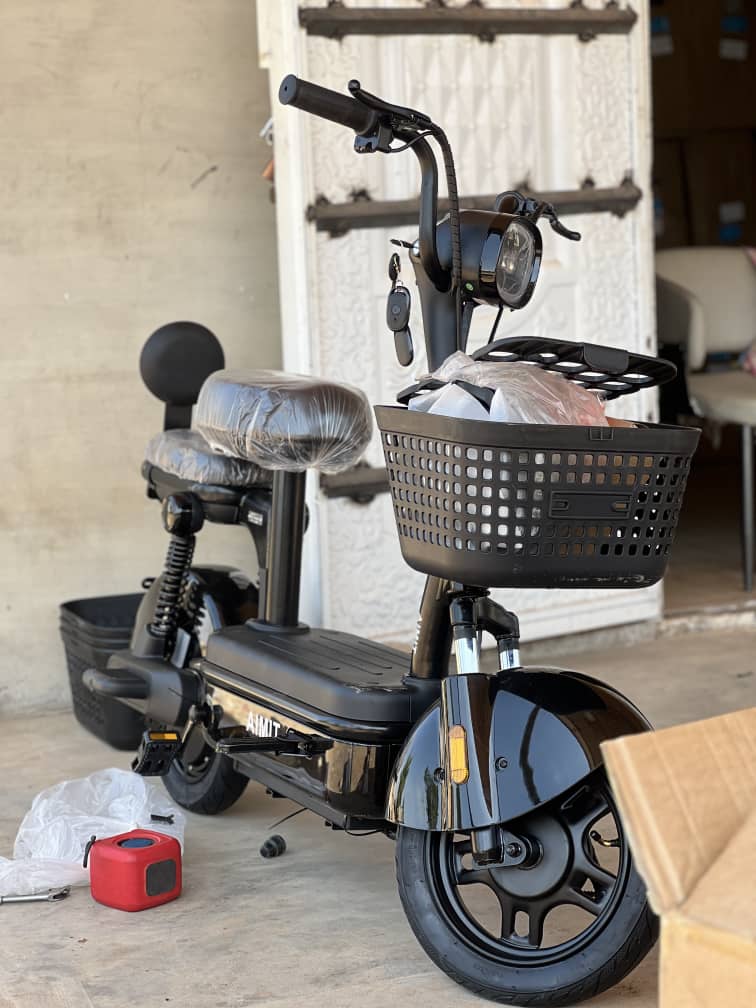
“People were afraid,” he recalls. “Some said they were toys for children. Others said adults could not use them for business.”
There were many challenges. Clearing the bicycles at the port was expensive. Transport costs were high. Financing was limited. Most of all, people did not trust the new technology.
To build confidence, Hakeem focused on education and affordability. He met traders and community leaders and explained charging, maintenance, and battery life. He also worked to prevent price inflation.
One of the first people to test the idea was Shafawu Bashiru, a midwife at Vineyard Hospital and a small trader. After the motorcycle ban, her trading business collapsed.
“I could not move around to collect money,” she said. “Everything stopped.”
She doubted the electric bicycle could carry her and her goods. To convince her, Hakeem gave her one to use for free.
“Now my business is alive again,” Hajia Shafawu said. “I move easily. Many women have followed me.”
New riders, new stories: affordable, clean, and practical
Today, electric bicycles are everywhere in Bawku. At the Bawku Market, I met 33-year-old Abubakari Jamila. She runs a shop selling motorbike parts and irrigation tools. Transporting goods used to be a struggle because tricycle riders charged high fees, and she could not reach many customers. Now, she rides an e-bike through the streets, delivering items.
“It saves my strength and is very convenient,” Jamila said. “I am happy with the e-bike. I can work without any trouble.”
As she glided past slow-moving tricycles, the laughter and chatter of women trading nearby filled the air, and the stress of long walks seemed to fade from the market.
A junior high school student, Mohammed Basira, rides his electric bicycle to school each morning.
“I arrive early and I’m not tired in class,” he explains.
For 45-year-old Farouk Anaba, a private delivery rider, the bicycle is now his office.
“I charge it at night and work all day and beyond,” he says. “No fuel, no police trouble.”
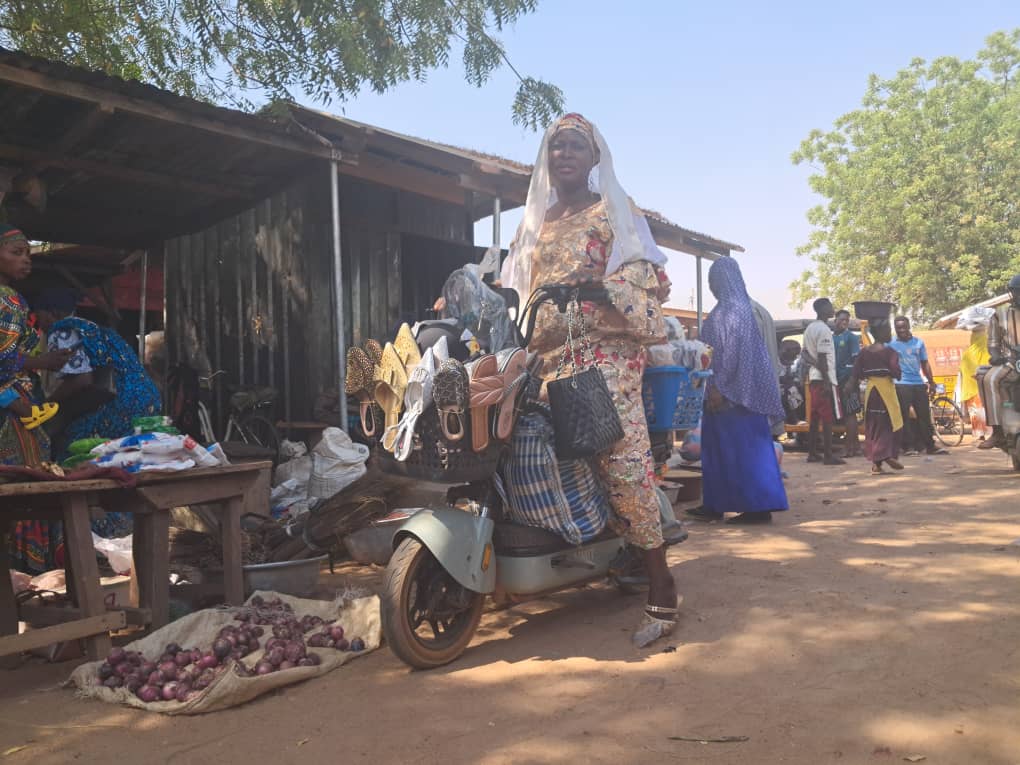
Teachers, health workers, traders, students, and delivery riders have all embraced the new mode of transport.
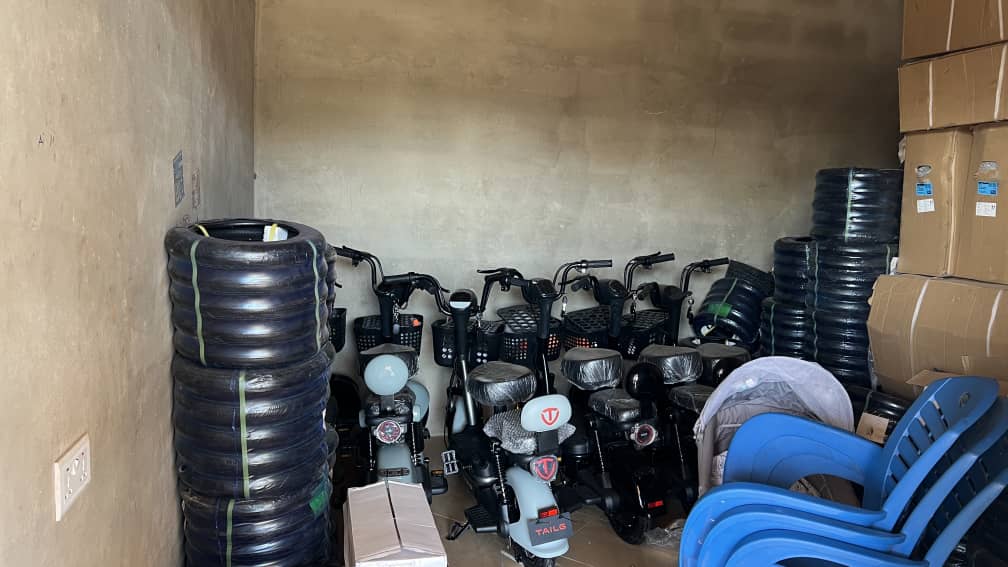
Since April 2023, over 2,000 electric bicycles have been sold by M. Sniff Business Hub.
The bicycles allow people to cover long distances that walking or traditional cycling cannot manage. Pedal-assist technology reduces physical stress, especially in intense heat.
Charging costs are low—often less than two cedis for a full charge, according to Hakeem. Maintenance is cheaper than fuel-powered engines. The business has created jobs, training young people to repair and service e-bikes, while others earn income through sales and delivery.
Hakeem currently employs seven e-bike assemblers, providing direct employment through local assembly. The assemblers work every three days, coinciding with market days, during which e-bikes are assembled. Each assembler can assemble an average of eight e-bikes per day and earns 100 cedis for each e-bike assembled.
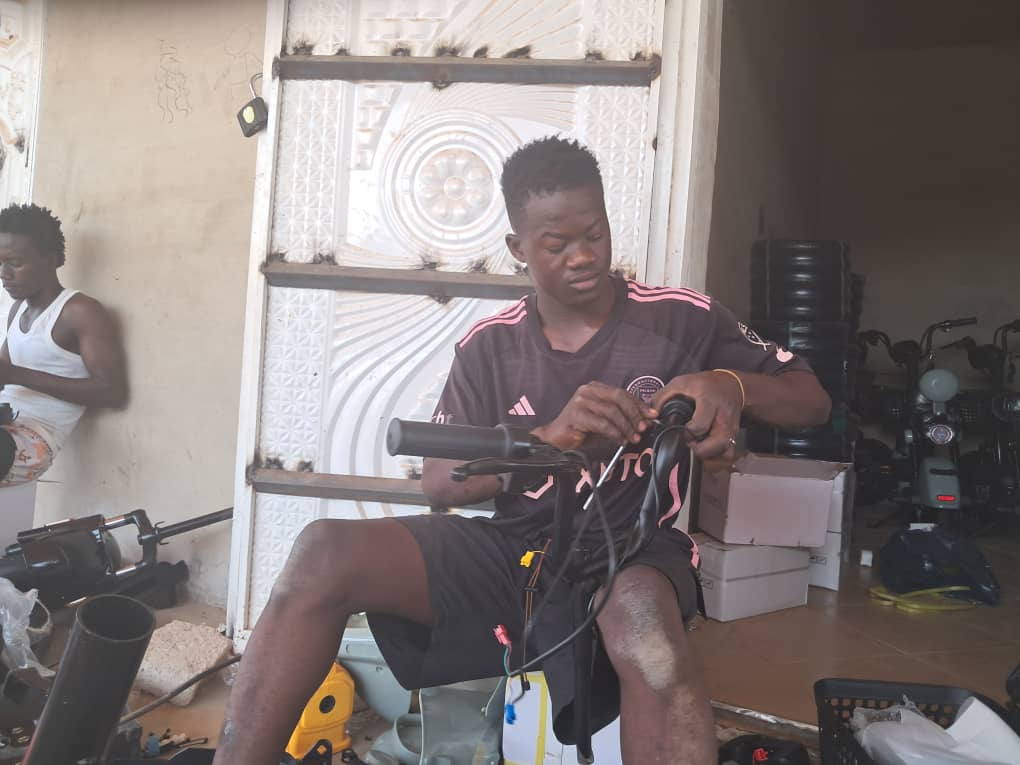
For 23-year-old Osman Sharif, one of the assemblers, the opportunity has been life-changing. He describes the job as a “life-saver,” explaining that it provides reliable income and practical technical skills at a time when employment opportunities for young people are limited.
According to Osman, the work not only supports his daily needs but also gives him a sense of purpose and stability. Beyond income, the initiative contributes to local economic activity by creating employment, building technical capacity, and supporting the growing demand for e-bikes in the community.
Hakeem says e-bikes can be charged using electricity, generators, or solar power, with plans to introduce solar charging stations in the Upper East Region. So far, power supply has not been a major challenge.
But the benefits go beyond convenience.
“Before the e-bikes, residents depended on petrol motorbikes,” Hakeem explains.
Twenty-six-year-old Rahinatu Bukari, a teacher and trader, explains why the e-bike made a difference for her.
“Before, I was spending about 50 cedis a day on petrol for my motorbike. It was too expensive, and sometimes I could not afford it at all,” she says. “With the e-bike, I can move around, deliver my goods, and pay less for energy. It has saved me money and time, and I don’t worry about fuel prices rising.”
Quiet climate action and innovation born from crisis
Beyond mobility, the bicycles support climate action. By replacing petrol-powered trips, they reduce fuel use, air pollution, and greenhouse gas emissions. They also reduce noise and congestion.
“I see this as climate action,” Hakeem says. “It is about decarbonizing transport and building resilience.”
Bawku’s experience aligns closely with Ghana’s efforts to promote electric mobility. Under Ghana’s National Electric Vehicle Policy, electric two-wheelers like e-bikes enjoy tax breaks, reduced import duties, and support for charging infrastructure. These measures aim to make e-bikes more affordable for ordinary Ghanaians and easier to maintain.
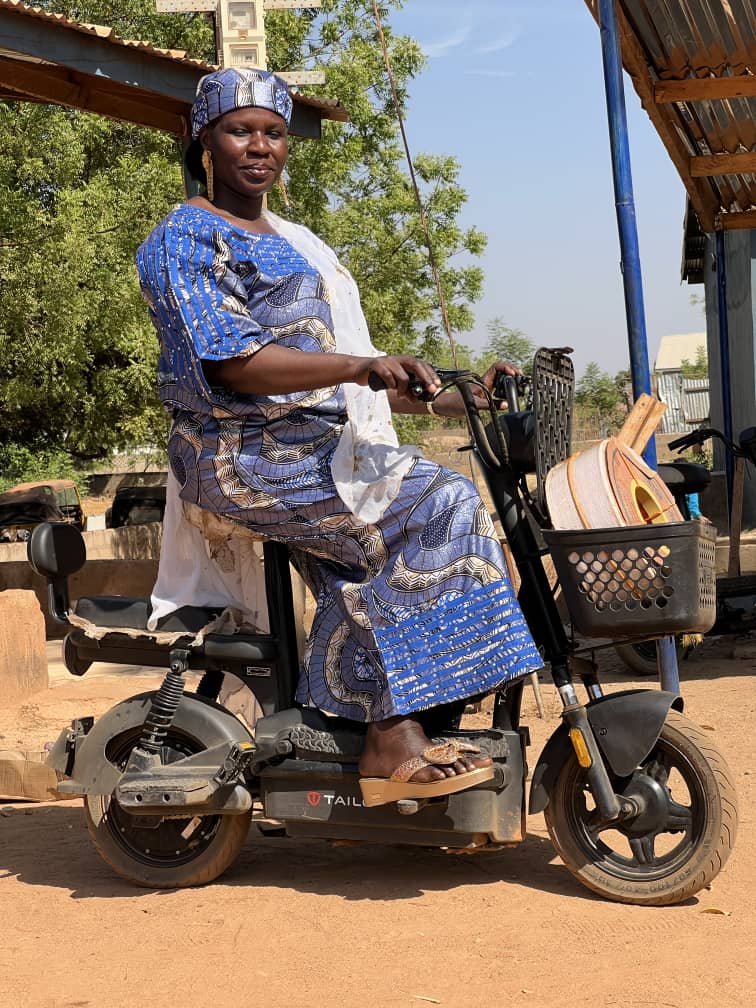
In Bawku, where transport options are limited, the policy provides a helpful framework. But for real change to happen, e-bikes must remain affordable, batteries and spare parts must be readily available, and communities must be willing to adopt the technology.
Despite its impact, the initiative has received no formal government support.
“I have not received recognition,” Hakeem says. “But I have received prayers and appreciation from the people.”
Running a green business in a fragile environment has come with lessons. Local repair systems are critical, Hakeem explains, because relying on imported parts causes delays. Public education is also essential for safe riding and proper battery care.
To address this, M. Sniff Business Hub organizes periodic free servicing and education before every sale.
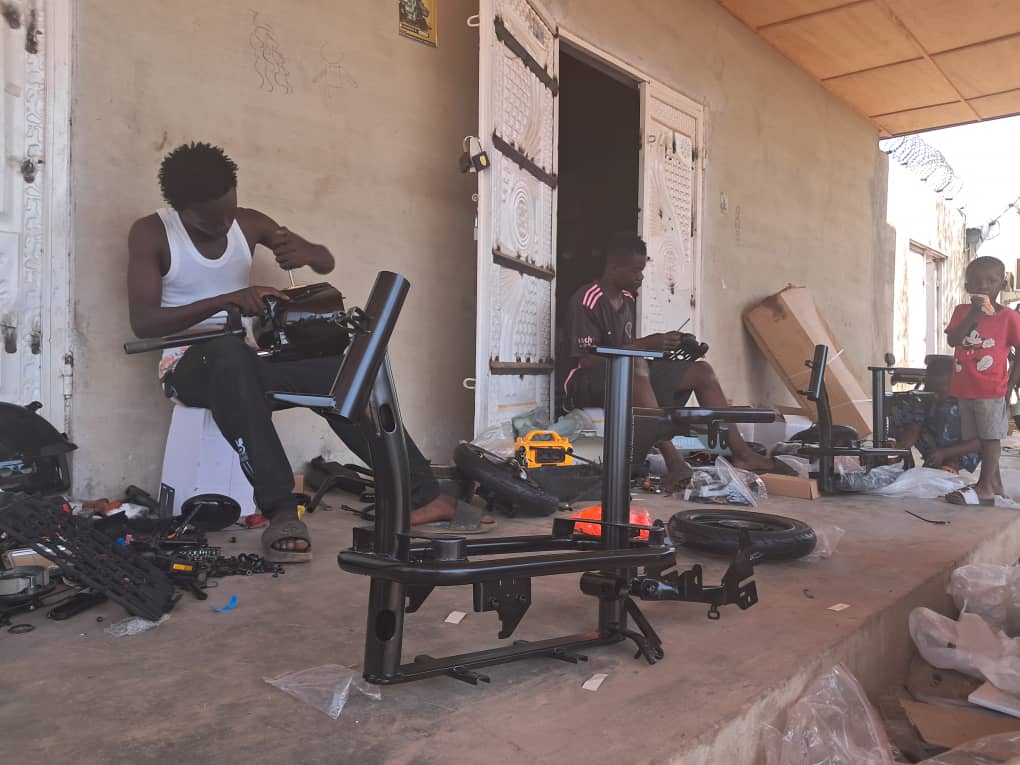
What began as a security restriction forced people to adopt clean transport. Electric bicycles became the solution not because of policy alone, but because people needed to survive.
“This is innovation driven by necessity,” Hakeem says.
The experience shows that electric mobility is not only for big cities. It can work in rural and conflict-affected areas where transport options are limited.
- President Commissions 36.5 Million Dollars Hospital In The Tain District
- You Will Not Go Free For Killing An Hard Working MP – Akufo-Addo To MP’s Killer
- I Will Lead You To Victory – Ato Forson Assures NDC Supporters
Visit Our Social Media for More
About Author