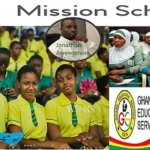
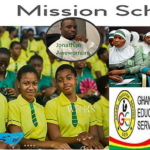
When news broke that some Muslim students at Wesley Girls (and by extension other Christian mission-founded schools) are claiming they have been barred from observing their religious obligations – wearing the hijab, fasting during Ramadan, or attending to Islamic rites, the uproar has forced Ghanaians to ask: how do we reconcile the religious identity of our historic mission schools with constitutional religious freedom?
If all Muslim students seek is the opportunity to pray and fast, which is necessary, this can be accommodated provided they are not refusing or rejecting the broader practices, routines, and traditions that define the mission school environment. It is worth noting that many mission schools across the country are already allowing Muslim students to pray, fast, and observe their basic religious obligations without conflict. This can be resolved far more effectively through respectful dialogue and mutual engagement – especially since many mission schools already provide such accommodations, rather than through legal confrontations or adversarial battles over rights. And if Muslim students insist solely on constitutional rights while mission schools insist on preserving their traditions, this will not help resolve the issue. It is important to remember that government assistance does not give anyone the authority to dictate or override the foundational ethos of these institutions.
This is more than a court case; it is a test of Ghana’s commitment to religious tolerance, pluralism, and respect – not only among citizens, but within our national institutions of learning.
Roots and Purpose of Mission Schools
Formal education in Ghana owes much of its origin to Christian missionary efforts. The arrival of the first Protestant missionaries, notably the Presbyterian Church of Ghana (Basel Mission) in 1828 and the Methodist Church in 1835 marked the beginning of structured school education on the Gold Coast. The earliest Wesleyan mission school was established at Cape Coast Castle, and by 1841 there were several mission-run schools for both boys and girls.
Over the years, churches including Methodist, Presbyterian, Anglican, and Catholic founded many of the schools that today form the backbone of Ghana’s “elite” second-cycle institutions such as Mfantsipim School, Adisadel College, St. Augustine’s College, among others. These were the first centers where Western-style education merged with gospel-driven moral formation.
Government Assistance, Not Takeover -But A Partnership with Identity
Over the years, as the modern state of Ghana emerged, church-owned schools gradually came under the supervision of the state. Through institutions such as the Ghana Education Service (GES), the government began regulating the curriculum, paying teachers’ salaries, and providing logistical support. Yet this relationship has always been understood as a partnership, not a takeover. The churches have maintained proprietorship, identity, and the founding ethos of the schools. Long before state involvement, they acquired land, built infrastructure, hired teachers, and shaped the character and spiritual culture of these institutions.
This dual structure (state-assisted but church-owned) has, for decades, produced some of Ghana’s most outstanding schools, noted for academic excellence, moral discipline, and strong character formation. Mission schools historically stood out because they offered holistic education: alongside rigorous academics, students were trained in discipline, leadership, moral values, community service, and spiritual grounding.
Graduates of these schools have gone on to permeate Ghana’s elite across public service, academia, professions, and business, often attributing their success to the values instilled during those formative years.
The Present Dispute: Rights vs Tradition, Complex and Delicate
At the center of the issue are allegations that Muslim students were prevented from wearing the hijab, fasting during Ramadan, or observing other Islamic practices, and were instead required to participate in Christian activities aligned with the school’s founding church.
For critics, such actions conflict with the constitutional guarantees of freedom of religion and conscience. They argue that no student should be denied the right to practice their faith, especially in a country long praised for its religious tolerance. Supporters of full religious accommodation insist that Muslim and indeed all non-Christian students must be allowed to practice their religion freely as a matter of individual rights and national values.
On the other hand, those who manage mission schools including the Christian Council of Ghana (CCG) and the Ghana Catholic Bishops’ Conference (GCBC) maintain that these schools were established on Christian foundations. Their identity has traditionally included Christian worship, devotional practices, and Christian-based disciplinary codes. They argue that students who enroll in mission schools implicitly accept the school’s spiritual framework, which the churches, as proprietors, have the right to preserve.
Thus emerges a delicate tension: the balance between the founding religious identity of mission schools and the constitutional rights of students. In a multicultural, multi-faith nation like Ghana, this challenge tests our ability to uphold both tradition and diversity. Ultimately, the ongoing debate compels us to examine whether mission schools can continue to maintain their Christian character while effectively accommodating the religious freedoms of all students.
Preserving Ghana’s Religious Harmony
Ghana’s reputation as a religiously tolerant nation is one of its greatest national assets. For decades, Christians, Muslims, and traditionalists have lived, worked, and studied together in harmony. Mission schools long admit children from varied ethnic and regional backgrounds, helping to forge a diverse and cohesive national elite.
As the current controversy unfolds, it is important not to frame it as a zero-sum battle between Christianity and Islam. Instead, Ghana must uphold the spirit of tolerance, mutual respect, and shared humanity – while also acknowledging the rightful traditions and heritage of long-standing institutions. Mission schools remain vital not only because of their academic reputation but because of their role in shaping character, leadership, and national cohesion. Preserving that legacy, while expanding it to reflect Ghana’s pluralistic reality, is essential.
Lessons from Global Models
Around the world, faith-based schools in multicultural societies have developed effective frameworks for managing the balance between institutional identity and religious diversity. Countries such as the United Kingdom, Canada, and Singapore offer models in which mission or faith-based schools maintain their core religious ethos while implementing clear, legally grounded policies that allow students of other faiths to practice essential aspects of their religion. For instance, many Catholic and Anglican schools in the UK permit students to wear religious attire, observe fasting, and be excused from specific devotional activities, provided these accommodations do not undermine the school’s educational mission or discipline structure (Beckford, 2019; Cooling, 2012). Similarly, Canada’s publicly funded Catholic schools follow provincial guidelines that mandate respect for religious diversity, requiring schools to provide reasonable accommodations for students from minority faiths (Kidder & Rawana, 2021). Singapore’s Ministry of Education also enforces a national framework that ensures both the preservation of school identity and the respectful inclusion of minority-faith practices (Tan & Cheung, 2020). Ghana can adapt such models by crafting clear, consensus-based policies that protect mission-school values while guaranteeing students’ constitutional rights. Ultimately, the challenge and opportunity are to balance institutional heritage with individual freedoms, preserving Ghana’s cherished harmony while ensuring its educational institutions reflect the diversity of its people.
The Way Forward: Dialogue, Respect, and Balanced Accommodation
Finding the way forward will not be simple, but a constructive path exists, one rooted in stakeholder engagement and a willingness to find middle ground.
- Recognize both heritage and rights
Mission schools have a heritage worth safeguarding. Their founders envisioned academic excellence grounded in Christian morality. Yet Ghana today is a pluralistic nation, and students of diverse faiths attend these schools. It is both possible and necessary to respect the schools’ identity while upholding the constitutional rights of all students. - Craft policies for religious accommodation
Instead of relying solely on legal confrontations, stakeholders – including the GES, the Christian Council of Ghana, the Ghana Catholic Bishops’ Conference, and representatives of other faiths should collaborate to establish clear guidelines on religious accommodation. Students of different faiths could be allowed to observe prayers or fast, provided such practices do not disrupt school operations or discipline. - Embrace flexibility without sacrificing identity
Mission schools can maintain their Christian ethos including chapel services, devotionals, and moral instruction while allowing non-Christian students to practice their faith privately or in designated ways. This avoids forced assimilation and fosters inclusivity.
The writer, Jonathan Awewomom, is a Research Scientist based in Miami, FLorida-USA and a Governance Advocate.
Email: [email protected]
References
- Beckford, J. (2019). Religious diversity and schooling in the UK. Routledge.
- Cooling, T. (2012). A Christian vision for state education. Journal of Education & Christian Belief, 16(1), 3–17.
- Kidder, A., & Rawana, E. (2021). Religious accommodation in Canadian schools: Policies and practices. Canadian Journal of Education, 44(2), 1–24.
- Tan, C., & Cheung, A. (2020). Religious harmony and education policy in Singapore. Asia Pacific Journal of Education, 40(4), 567–580.
- https://www.gbcghanaonline.com/opinion/statement-in-defense-of-ghanas-christian-mission-schools-upholding-legacy-values-mutual-respect-and-the-rule-of-law/2025/?utm_
- https://www.aciafrica.org/news/18845/christian-leaders-in-ghana-clarify-governments-support-for-mission-schools-partnership-not-state-takeover?utm
- https://www.modernghana.com/news/1451881/religious-freedom-in-ghana-wesley-girls-high.html?utm
- President Commissions 36.5 Million Dollars Hospital In The Tain District
- You Will Not Go Free For Killing An Hard Working MP – Akufo-Addo To MP’s Killer
- I Will Lead You To Victory – Ato Forson Assures NDC Supporters
Visit Our Social Media for More
About Author