The resurgence of military coups across Africa since 2020 represents a troubling regression in the continent’s democratic trajectory. From the attempted coup in Benin on December 7, 2025, led by Lieutenant Colonel Pascal Tigri, to the successful overthrow in Guinea-Bissau on November 26, 2025, orchestrated by Brigadier General Dinis Incanha, the contemporary landscape reveals a disturbing pattern.
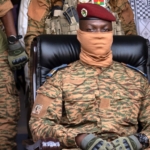
This wave includes coups in Gabon (August 30, 2023) under General Brice Oligui Nguema, Niger (July 26, 2023) by General Abdourahamane Tchiani, the dual coups in Burkina Faso (September 30, 2022, and January 24, 2022) led first by Lieutenant Colonel Paul-Henri Sandaogo Damiba and then Captain Ibrahim Traoré, Sudan’s October 25, 2021, power grab by General Abdel Fattah al-Burhan, Guinea’s September 5, 2021, takeover by Colonel Mamady Doumbouya, and Mali’s May 24, 2021, coup orchestrated by Colonel Assimi Goïta.
These events underscore a fundamental paradox: while military coups often emerge from legitimate grievances about institutional weakness and governance failures, they invariably exacerbate rather than resolve the underlying crises they purport to address.
The justifications offered by coup leaders are remarkably consistent across contexts. Tchiani in Niger cited the country’s deteriorating security situation as grounds for his actions. Traoré in Burkina Faso accused his predecessor, Damiba, of failing to contain jihadist insurgencies despite having seized power on precisely the same premise. Doumbouya in Guinea condemned President Alpha Condé’s corruption and constitutional manipulation. Al-Burhan in Sudan claimed he was preventing civil war and protecting the democratic transition.
These rationales, while often resonating with frustrated populations, reveal a critical misunderstanding: military force cannot build the transparent, accountable, inclusive institutions necessary for sustainable governance. Instead, coups create a vicious cycle wherein weak institutions justify military intervention, which further undermines institutional development, thereby establishing conditions for future coups.
The Institutional Vacuum: How Coups Reflect and Worsen State Fragility
Africa’s recent coups have emerged predominantly in states characterised by profound institutional weaknesses. Mali, which experienced two coups in nine months (August 2020 and May 2021), exemplifies this pattern. The country ranked near the bottom of the UN’s Human Development Index and faced concurrent crises: a brutal jihadist insurgency that displaced hundreds of thousands, pervasive corruption, and democratic backsliding manifested through electoral irregularities. When President Ibrahim Boubacar Keïta was overthrown in August 2020, many Malians initially supported the military’s intervention. Yet within months, Vice President Assimi Goïta orchestrated a second coup against the transitional civilian government, demonstrating that military rule breeds instability rather than resolution.
Burkina Faso’s trajectory illustrates this dynamic even more starkly. Nearly 40 per cent of the country was controlled by non-state armed groups by September 2022, reflecting the state’s profound inability to maintain territorial integrity or protect citizens. Lieutenant Colonel Damiba justified his January 2022 coup by citing President Roch Kaboré’s failure to address the security crisis. However, Damiba’s regime proved equally ineffective, losing even more territory to jihadists. When Captain Traoré overthrew Damiba in September 2022, he employed identical justifications—poor security management and inadequate support for frontline troops. The coup resulted in the suspension of major military operations in conflict zones and diverted crucial resources from the frontlines, demonstrating how political instability directly undermines the security objectives that coup leaders claim to prioritise.
The institutional damage extends far beyond security sectors. In Guinea, despite Doumbouya’s promises to combat corruption through special courts, there emerged a widespread sense that investigations and prosecutions were being used selectively rather than addressing systemic corruption. The transitional authorities repeatedly delayed constitutional referendums and failed to allocate budgets for promised elections, while forcefully crushing dissent and arresting civil society activists, journalists, and opposition members. This pattern of broken promises and intensified repression characterises virtually every recent coup, revealing a fundamental truth: military governments lack both the legitimacy and the institutional mechanisms to implement meaningful reforms.
Economic Deterioration: The Material Costs of Political Instability
The economic consequences of military coups are devastating and immediate. Countries that are poorer and whose democracies are less stable have historically been more prone to takeovers, with fifteen of the twenty countries topping the 2022 Fragile States Index being in Africa, twelve of which have experienced at least one successful coup. This correlation is not coincidental but causal in both directions: weak economies create conditions for coups, and coups further weaken economies through multiple mechanisms.
International sanctions represent the most immediate economic shock. Following Niger’s July 2023 coup, ECOWAS imposed sanctions including border closures, a no-fly zone, suspension of commercial transactions, and cuts to electricity supply exceeding 70 per cent of Niger’s total. The junta announced a 40 per cent budget cut due to these “heavy sanctions,” exposing the country to major drops in external and internal revenue. The electricity crisis particularly devastated ordinary citizens, with Niger’s state utility company able to meet only between one-quarter and one-half of demand across the country.
Mali’s experience demonstrates the compounding nature of these economic shocks. After Goïta’s May 2021 coup, 37.6 per cent of Malians surveyed indicated they went without food at least several times in 2021-2023, representing a significant deterioration in food security. The suspension of aid from traditional partners, combined with operational disruptions caused by political instability, created acute humanitarian crises. When France suspended military cooperation and eventually withdrew its forces, Mali lost not only security assistance but also associated economic benefits and legitimacy in international forums.
In Burkina Faso, the country experienced the most significant decline of any African nation in the Absence of Armed Conflict and Absence of Violence against Civilians since 2017, with catastrophic economic ramifications.
The deteriorating security forced aid organisations to suspend operations, while blockades of towns by armed groups made it impossible to reach populations facing starvation. The UN highlighted that more than 630,000 people were on the brink of starvation, representing the worst hunger crisis in six years.
Guinea’s economic trajectory following its September 2021 coup reveals how political instability destroys development gains. Acute food insecurity skyrocketed to an estimated 11 per cent of Guinea’s 14 million people from 2.6 per cent in 2020, with over one million Guineans facing food crisis.
The explosion of Guinea’s main fuel depot in December 2023 led to electricity shortages and increased fuel prices, compounding citizens’ frustrations with poor government service delivery. These material hardships directly contradicted Doumbouya’s promises of improved living conditions and illustrated how coups destroy rather than build economic prosperity.
Health Systems in Crisis: The Human Cost of Military Rule
The disruptive effects of recurring coups on fragile healthcare sectors have received insufficient attention despite their devastating impacts. Military takeovers interrupt healthcare systems, cause economic downturns, and create political instability that directly compromises public health outcomes. The consequences for maternal and child health, medical supply chain disruptions, and public health policy implementation are severe and long-lasting.
The COVID-19 pandemic revealed these vulnerabilities with particular clarity. The pandemic negatively affected countries most prone to coups by straining already tight budgets and placing further restrictions on populations already sceptical of their government. In coup-affected nations, healthcare responses to the pandemic were further compromised by political instability, loss of international support, and the diversion of resources to security concerns.
Sudan’s October 2021 coup provides a stark illustration. Under al-Burhan’s leadership, the Sudanese Armed Forces’ war tactics included indiscriminate bombing of civilian infrastructure, attacks on schools, markets, and hospitals, and extrajudicial executions.
The conflict that emerged after the coup killed thousands and created one of the world’s most catastrophic humanitarian situations. Healthcare facilities became targets, medical personnel fled, and populations lost access to essential services, including emergency care, maternal health services, and chronic disease management.
In countries facing jihadist insurgencies alongside coups, health outcomes deteriorated even more precipitously. Mali, Burkina Faso, and Niger all experienced coups while battling armed groups that deliberately targeted healthcare infrastructure.
The combination of conflict-related destruction, coup-induced aid suspension, and military governments’ prioritisation of security over health created perfect storms for public health disasters.
Educational Collapse: Undermining Future Generations
Education represents both a casualty and a cause of coup cycles. In the 1960s, Africa’s overall primary school enrollment rate averaged 42 per cent, compared to nearly 100 per cent in OECD or East Asian countries.
Had Africa achieved OECD-level enrollment rates during that period, its average annual growth rate would have been significantly higher. Improved enrollment rates since then suggested brighter economic prospects, but recent coups have reversed these gains.
Military governments consistently deprioritise education in favour of security spending. In February 2024, Niger issued new regulations securing unrestricted access to state resources for military spending, which became independent of public procurement regulations and thus independent control. This facilitated faster weapons purchases and mercenary deployment, but also enabled personal enrichment of rulers while education budgets were slashed.
The displacement caused by insecurity in coup-affected states compounds educational deterioration. In Burkina Faso, where an estimated 1.9 million people were internally displaced, entire communities lost access to schools. Teachers fled conflict zones, facilities were destroyed or occupied by armed groups, and families displaced by violence lacked the stability necessary for children’s education. The long-term consequences are catastrophic: a generation growing up without education, reducing human capital and perpetuating poverty cycles that make future coups more likely.
Guinea’s experience reveals how political repression under military rule extends into educational spheres.
Universities and research institutions that could strengthen governance capacity faced budget cuts and political interference. Journalists and media regulators who implicated the Doumbouya regime with corruption were imprisoned for defaming the head of state, creating climate where intellectual inquiry and critical thinking—essential foundations for educational excellence—became dangerous activities.
The Standard of Living Decline: Measuring Coup Impacts on Daily Life
Comprehensive governance indices provide quantitative evidence of coups’ devastating impacts on citizens’ quality of life. All four countries experiencing recent coups—Mali, Guinea, Burkina Faso, and Niger—experienced declines in Security & Safety, Anti-Corruption, Participation, Inclusion & Equality, and Business & Labour Environment subcategories.
Mali’s governance deterioration was particularly severe. Only 37.7 per cent of surveyed Malians supported democracy after the coups, representing the largest decline in democratic support, while living conditions continued deteriorating despite—or because of—military rule. The promise of improved security proved hollow as the Alliance of Sahel States (formed with Burkina Faso and Niger) aligned closer with Russia and expelled French forces without achieving meaningful security improvements.
In Guinea, approximately two-thirds of Guineans surveyed viewed their living conditions as bad or very bad in 2021-2023, despite Doumbouya’s promises of transformation. The gap between military rulers’ rhetoric and citizens’ lived experiences reveals a fundamental flaw in coup logic: seizing power cannot substitute for building institutions that deliver services, protect rights, and create economic opportunities.
Niger’s experience demonstrates how coups accelerate multidimensional decline. The country deteriorated in the Security & Rule of Law, Participation, Rights & Inclusion, and Human Development categories. Support for democracy declined precipitously as citizens witnessed how military rule constricted political participation without delivering promised security improvements. The closure of civic space, imprisonment of opposition figures, and restrictions on media freedom created environments where grievances could not be addressed through democratic channels, storing up conditions for future instability.
Historical Parallels: Lessons Unlearned from Africa’s Coup Cycles
Africa’s history provides abundant evidence that coups compound rather than solve governance problems. The immediate post-independence period between the 1960s and 1970s saw the first wave of coups, which were generally bloody and resulted in the deaths of twelve African leaders, extrajudicial killings, and widespread human rights abuses. These coups were often praised for truncating one-party statism and life-long presidencies, yet they failed to build sustainable democratic institutions.
The second wave from 1990 to 2001, led largely by mid-level military officers touting economic mismanagement justifications, accounted for only 14 per cent of leader deaths but still represented major threats to security of tenure and the emerging democracy. This wave prompted the 2000 Lomé Declaration and tightened continental norms against unconstitutional changes of government. Yet despite these normative frameworks, coups have resurged since 2020.
The current third wave exhibits concerning characteristics. Recent coups in Guinea, Niger, and Gabon have been led by elite presidential guards rather than regular armies, highlighting how those closest to power can most easily seize it. These units, often better armed and trained than regular forces, use their proximity to presidencies to take control before lobbying for broader military support. This pattern suggests that creating powerful security forces to protect regimes paradoxically makes those regimes more vulnerable to overthrow.
Mali’s history is particularly instructive. The country witnessed coups in 1968, 1991, 2012, 2020, and 2021, demonstrating how each military intervention fails to break the coup cycle. Thomas Sankara’s revolutionary government in Burkina Faso (1983-1987) initially inspired hope for transformative change, only to be overthrown by Blaise Compaoré, who then ruled autocratically for 27 years before being deposed in 2014. The pattern repeats: coup leaders promise reform, fail to deliver, and create conditions for future coups.
The Quelling of Dissent: How Military Rule Prevents Course Correction
Even where military governments establish apparently controlled systems, they inevitably suppress the dissent and political competition necessary for identifying and correcting policy failures. Guinea exemplifies this dynamic. After the September 2021 coup, the junta dissolved the main opposition coalition Front National de la Défense de la Constitution (FNDC) in August 2022 and jailed at least three of its leaders. When these leaders were released in May 2023, the regime’s repressive apparatus remained intact, forcing longtime opposition leader Cellou Dalein Diallo into exile.
On July 9, 2024, three opposition members—Oumar Sylla, Mamadou Billo Bah, and Mohammed Cissé—were arrested and taken to a detention facility on Kissa island, where they were allegedly tortured. While Cissé was eventually released, the other two remain disappeared, and their wives filed lawsuits in France against Doumbouya for ordering forced disappearances. This pattern of escalating harassment, arbitrary detention, and violence against critics prevents the opposition oversight necessary for democratic governance.
Burkina Faso under Traoré has followed a similar trajectory. The regime has forcefully crushed dissent and arrested civil society activists, journalists, activists, prosecutors, and judges, with critics unlawfully conscripted into military service. This suppression extends to routine administrative functions: those who would normally audit security expenditures or question military strategies face imprisonment or worse. Without mechanisms for feedback, course correction, or accountability, military governments cannot adapt to changing circumstances or learn from policy failures.
The silencing of dissent also eliminates early warning systems for brewing crises. In democratic systems, opposition parties, civil society organisations, and independent media identify emerging problems, propose alternatives, and mobilise constituencies for change. Military governments systematically dismantle these mechanisms, leaving regimes blind to popular discontent until it explodes in violence or another coup. Support for democracy in Mali declined to only 37.7 per cent after military rule, reflecting how suppression breeds cynicism about all governance systems rather than building support for the military government.
The Path Forward: Building Stability Through Democratic Institutions
The consistent failure of coups across decades and contexts points toward an alternative approach grounded in institutional development rather than military force. Africa has seen 220 of the world’s 492 coup attempts since 1950, demonstrating that military interventions have become normalised responses to governance failures. Breaking this cycle requires addressing root causes rather than symptoms.
Transparency as Foundation: Governments must operate with unprecedented openness regarding resource allocation, decision-making processes, and policy outcomes. Citizens in countries like Guinea and Mali have repeatedly cited corruption and lack of accountability as motivations for initially supporting coups. However, military governments prove even less transparent than their civilian predecessors, operating with fewer constraints and less oversight. Genuine transparency requires independent audit institutions, freedom of information laws with enforcement mechanisms, and protection for whistleblowers who expose wrongdoing.
Accountability Through Multiple Channels: No single accountability mechanism suffices. Effective governance requires electoral accountability through genuinely competitive elections, legal accountability through independent judiciaries that can prosecute official misconduct regardless of rank, parliamentary accountability through robust legislative oversight, and social accountability through active civil society monitoring. All recent coup-affected countries experienced significant declines in Accountability & Transparency subcategories, illustrating how military rule systematically dismantles these safeguards.
Inclusion Across Social Divisions: Many African societies face ethnic, regional, religious, and economic cleavages that military governments typically exacerbate rather than bridge. Burkina Faso’s jihadist insurgency, for example, has complex roots in ethnic tensions between farming and herding communities over land and resources, which generations of autocratic rule (both civilian and military) failed to address. Participation, Inclusion & Equality declined across all recent coup-affected states. Genuine inclusion requires constitutional frameworks that protect minority rights, electoral systems that incentivise coalition-building across social divides, decentralised governance allowing regional autonomy, and equitable resource distribution addressing historical grievances.
Systems Prioritising Citizens: The ultimate test of governance is whether systems serve citizens or elites. Military governments invariably prioritise their own institutional interests and personal enrichment over public welfare. Niger’s new regulation law, securing unrestricted military access to state resources without public procurement regulations, paved the way not only for weapons purchases but also for personal enrichment of new rulers. Democratic systems, while imperfect, provide mechanisms through which citizens can demand responsive governance: competitive elections allowing peaceful leadership change, independent media exposing corruption and incompetence, civil society organisations mobilising constituencies for policy change, and judicial systems protecting individual rights against state overreach.
Conclusion: The Necessary Rejection of Military Solutions
The recent wave of coups across Africa demonstrates with tragic clarity that military force cannot build the stable, prosperous societies coup leaders promise. From Benin’s December 2025 attempt to Guinea-Bissau’s November 2025 success, from Gabon’s “palace revolution” to Niger’s presidential guard takeover, from Burkina Faso’s double coup to Sudan’s descent into civil war, each instance reveals how power seizures exacerbate the institutional weaknesses, economic vulnerabilities, and social divisions they purport to address.
The evidence is overwhelming: coups worsen economic conditions through sanctions, aid suspension, and investor flight; they destroy health and education systems through resource diversion and service disruption; they eliminate accountability mechanisms that could identify and correct policy failures; and they create cycles of instability that make future coups more likely. Military governments’ consistent pattern of broken promises, intensified repression, and personal enrichment reveals that good intentions, where they exist, cannot substitute for legitimate institutions.
Stability in Africa will emerge not through military interventions but through the patient, difficult work of building transparent, accountable, inclusive institutions that make citizens their priority. This requires international support focused on strengthening rather than circumventing state institutions, regional organisations enforcing anti-coup norms through consistent rather than selective sanctions, domestic civil societies given space to organise and advocate, and political settlements addressing underlying grievances through negotiation rather than force.
The choice facing African societies is not between imperfect democracy and military efficiency, but between systems that can self-correct through political participation and systems that suppress dissent while perpetuating the problems they claim to solve. Every coup since 2020 has demonstrated that military rule offers not a solution but merely a more controlled descent into instability. Only by building institutions grounded in transparency, accountability, inclusion, and citizen-centred governance can Africa break free from the coup trap that has undermined development for seven decades. The path to stability runs not through presidential palaces seized at gunpoint, but through the hard work of democratic institution-building that no coup can shortcut.
- President Commissions 36.5 Million Dollars Hospital In The Tain District
- You Will Not Go Free For Killing An Hard Working MP – Akufo-Addo To MP’s Killer
- I Will Lead You To Victory – Ato Forson Assures NDC Supporters
Visit Our Social Media for More
About Author