“If charity truly begins at home, why is Africa living in a dump’s paradise? ”
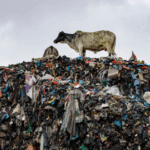
What if I told you that every week, over 15 million secondhand garments arrive in Ghana and many of them will never be worn? What if I told you that the very clothes meant to help Africa are quietly choking her soil, her rivers, and her communities?
I’m not here to talk about bustiers or how to wear them, I’m here to uncover the story behind the fabric of the clothes you wear.
The Lord Himself said in Leviticus 25:23,
The land must not be sold permanently, for the land is mine, and you are but foreigners and strangers living in it. The land does not belong to us; we are common stewards, entrusted to care for what is sacred.
The land does not belong to us; we are common stewards, entrusted to care for what is sacred. Then I look at my own closet.
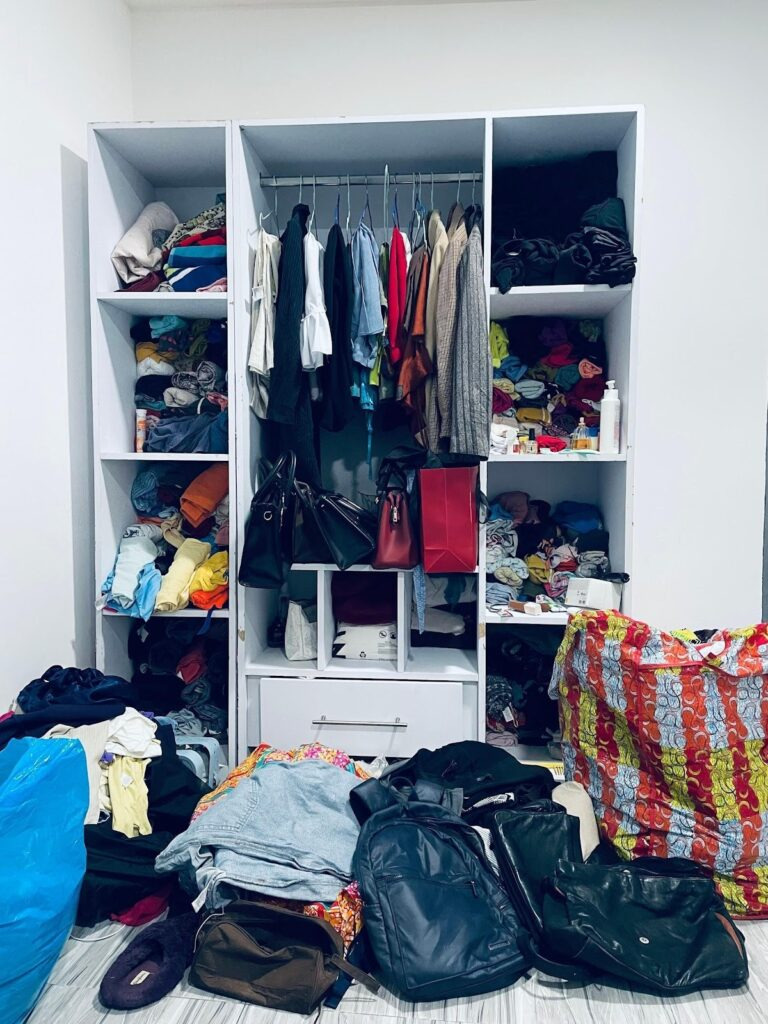
Messy, chaotic, full of thrifted clothes I’ve long outgrown. Some I plan to give away, others I’ll cut into rags. But each piece reminds me of how easily we hold on to what no longer serves us just like the world does with its waste and I’m not ashamed to say I am part of the problem.
Let’s begin with the word “OBRONIWAWU.” In Twi, it means “dead white man’s clothes.” It’s the name we give to the pile of secondhand garments shipped from Western countries into Ghana, clothing that once carried someone else’s story, now dumped on our shores in the name of charity.
Then again let me define what colonialism truly entails before we go deeper. The term colonialism comes from the Latin colonia, derived from colere, meaning “to cultivate” or “to inhabit.”
According to Merriam-Webster, it is “the domination of a country or people by a foreign state or government.” But listen to me when I say colonialism is far more than the takeover of land or property; it is the conquest of value. It is when one society decides what is Vogue, what is worthy, and what should be discarded like a pile of trash. It is the system that taught us to export our gold, cocoa, and cotton, only to import their language, their ideas, and their waste.
Today, it hides behind donations like charity boxes, secondhand labels, and bales of used clothes. What was once portrayed as aid has quietly become harm. The very garments meant to “uplift” Africa now suffocate her soil, her rivers. I know the story like the back of my palm. Growing up, I didn’t have the best of everything. Every December, I would cry when my parents told me to wear my African print for Christmas.
“I don’t want this!” I’d say. I longed for the shimmering jackets and layered skirts from Hannah Montana, the glittering tops from Nickelodeon, the rhinestone jeans and the Ballgowns that made me feel foreign.
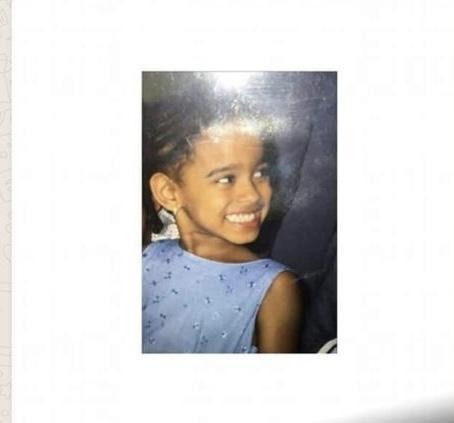
But after a few washes with my Samina soap, those clothes would fade and fray. When they finally tore, no one had another like it. They vanished, just like the illusion they represented. Yet my Kwame Nkrumah pencil fabric; It could always be replaced at the market because that fabric was ours. It was made for us, by us. It carried our story, honored our artisans, and represented revolution.
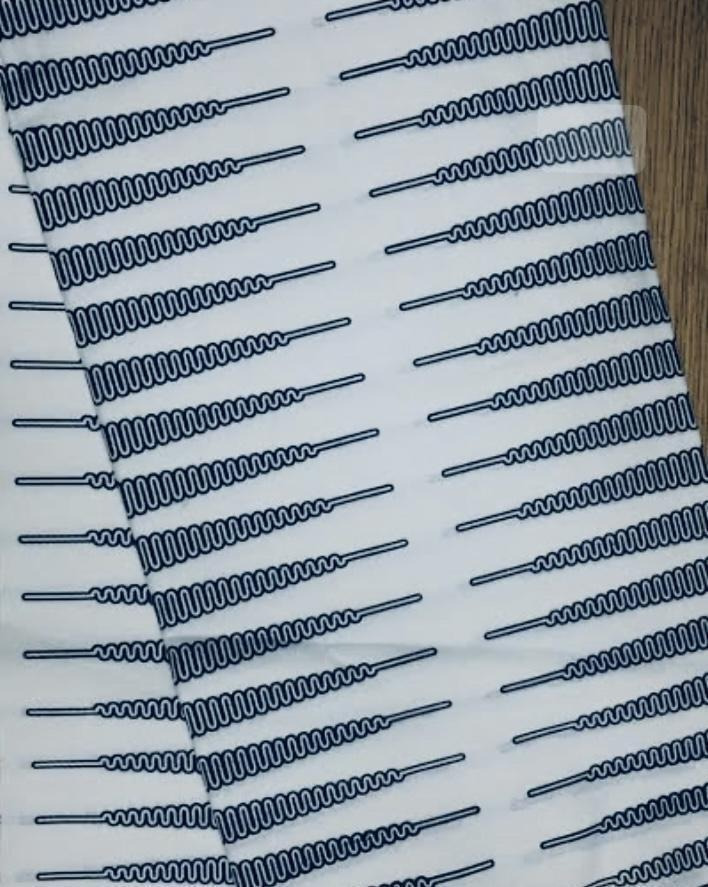
When it tore, it could easily be fixed and upcycled. One cloth could become a blanket, a baby carrier, a head tie: one fabric with many lives. It brought pride to women and comfort to babies, the kind of sustainability we practiced long before the world gave it a name.
Years later, I realized my childhood longing for “the white man’s fabric” was not innocent. Colonialism had been silently fed into my mind. It taught me that what was foreign was superior and what was African was “fake,” not properly made ‘ even though we have always possessed the raw materials to create the finest things from scratch.
That same mentality lingers today not only in children, but across our entire fashion industry. Ships still dock at our harbors weekly, carrying bales of used clothing: Obroni Wawu “the dead white man’s clothes.” And the moment they hit the docks, it’s like a swarm of greedy goblins. People bend over the bales, sweat dripping down their faces, onto the clothes, as they tug, pull, and plead; fighting over tops that may never fit them. They often yell:
“MASA FIORKO“
“I saw it first! It belongs to me!”
“Yes, madam, keep this one for me!”
“Oh, madam, this dress is nice. Store rejects are the best, chale!”
For some, it’s a small business victory in a hard economy. For others, it’s the only way to clothe their children. Each bale is a gamble of Russian roulette. It could be gold. It could be TRASH. But for many, it’s their Sunday BEST.
The fashion industry overseas profits from overproduction, then rebrands its leftovers as secondhand “aid.” This cycle keeps African countries as end markets, never equals, never creators. And for Ghanaian designers like me, that creates an unfair battlefield.
More than sixty percent of what enters our markets is waste; torn, stained, or unsellable. Africa has long been treated as the hand-me-down sibling in the global fashion family, the one who never receives anything new, only what others have outgrown. And it wasn’t just our clothes that were secondhand. From hospital beds to school desks, couches, shoes, lingerie, even frozen chicken.
Our current President, John Dramani Mahama, once called such imports “Akokɔ Wawu” dead chickens. Nothing came fresh. Nothing new arrives. Even our very vision of progress came pre-used.
This became painfully clear on the 3rd of June 2022. I remembered it so well because the air smelled of wet sand and exhaust, and it rained heavily. The streets flooded, and the water carried with it more than just mud and debris. Tragically, someone was swept away into a clogged drainage system.
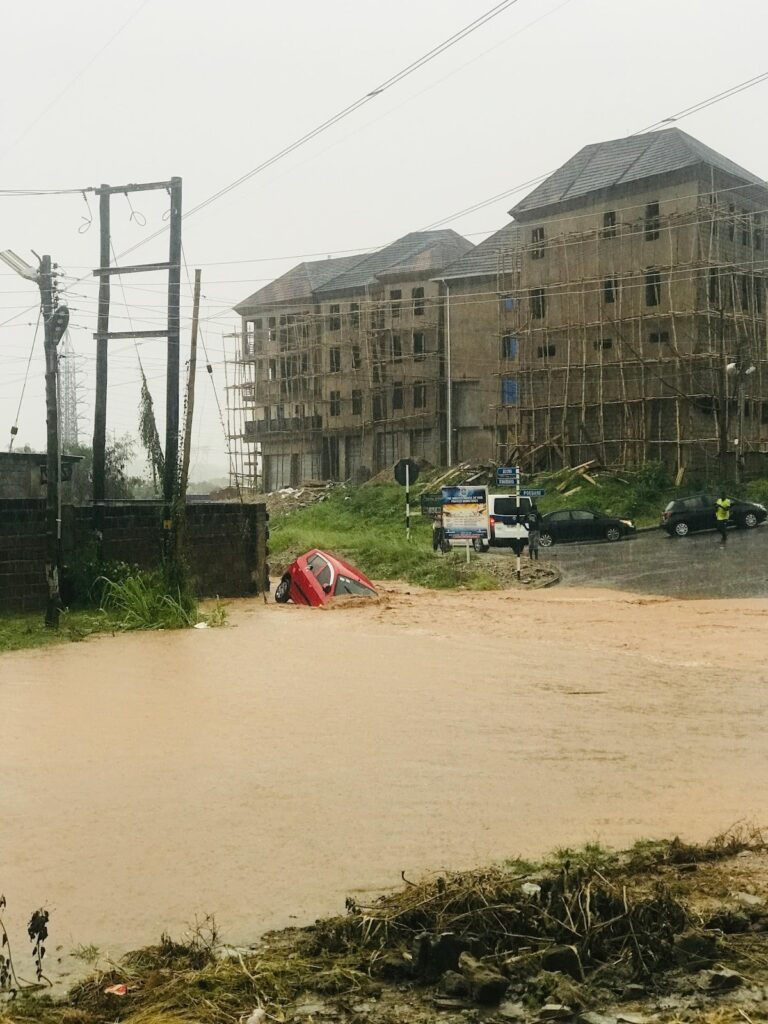
When we found him the next morning, a cloth covered his face. It was clear he had tried to climb out, but the floodwaters, heavy with mountains of discarded clothes, had trapped him. The only thing in that drainage was fabric mountains of it and when he finally emerged, the clothes were stuck to his face, suffocating him.
“Maybe, if our gutters had been clear, he could have been washed away safely, without being caught in this heap of neglect.”
So, when we entered our webinar series virtual discussions hosted by GYEM, the speakers shared powerful insights on sustainability’s microfibers, upcycling, collaboration, innovation and citizen science. Their words mattered, but I couldn’t ignore the truth beneath it: these sustainability conversations exist because of a deeper wound: “waste colonialism”. Their voices highlighted the symptoms, but the root remains the same: a global system that treats Africa as the world’s final dumping ground.
Marine Scientist Dorcas Antwi warned: “Microfibers are everywhere in the sea, in the soil, even in the human brain.”
Kofi Anyensu, materials engineer and project coordinator at Plastic Punch, added: “We are educating people to join cleanups and training them to become citizen scientists who can take this knowledge into their communities.”
Nabeela Abubakari, founder of GoTo Initiatives, reminded us: “Kantamanto practiced sustainability long before it was a trend. We’ve always been repairing, reinventing, transforming.”
Yayra Agbofa, founder of Revival Earth, pushed further: “Creativity becomes powerful only when it solves a real problem. Sustainability is long-term thinking, not just aesthetics.” He emphasized that many innovations arise from collaboration: “People sharing questions, ideas, and purpose.”
Elsie Klu of REBEAD shifted the focus to the future: “Educate the next generation. Young people, especially women, are driving this movement.”
Frank Koomson grounded the discussion in reality: “We should look beyond statistics and remember the real communities that carry the burden of fashion waste.” He praised the KIPAWA app, which helps people track and dispose of fashion waste easily, a real, practical solution.
“But even with all these powerful insights, one truth remained: sustainability cannot heal a wound that was opened by colonialism.”
As a fashion designer, I often ask myself how did we get here? How do we build a thriving local industry when our markets are flooded with cheap, disposable clothes from abroad? How do we convince people that our own batik, kente, and smock fabrics are not “old-fashioned,” but sustainable? My answer would always be OH AFRICA!
Perhaps charity never truly begins at home; perhaps it’s exported, along with everything else they no longer want in their surroundings. If nothing changes, Kantamanto will become the new Atacama Desert, a graveyard of discarded fashion waste. A mirror of Chile’s clothing dumps where satellite images now show mountains of forgotten garments.
I see the same pattern. The same exploitation. Different soil. Fashion is political. And until we cut the colonial thread that still runs through the global fashion system, no brand and no country can truly call itself sustainable. Sustainability in Ghana cannot be a copy-and-paste version of Western ideals.
For us, sustainability means freedom and harmony in producing what we wear, valuing our artisans, and respecting our own culture. It means taking the waste they dump on us and transforming it into art, into fashion with one voice and a conscience. I believe there is hope for the New Africans Gone are the days when they said, “If you want to hide something from an African, put it in a book.”
Now, we are reading aggressively. We are seeing clearly. We are rising. I believe in the power of design to reclaim and to resist what destroys our planet.
“The question is, when will Africa stop inheriting and start creating again?
______________________________________________________________
This article is by Almond Harmony Turé, the second-place winner for the #YouthOvaFashionWaste Webinar and Digital Contest, organised by the Ghana Youth Environmental Movement (GYEM) with support from the Pulitzer Center.
- President Commissions 36.5 Million Dollars Hospital In The Tain District
- You Will Not Go Free For Killing An Hard Working MP – Akufo-Addo To MP’s Killer
- I Will Lead You To Victory – Ato Forson Assures NDC Supporters
Visit Our Social Media for More
About Author