

The Ashanti Regional Secretariat of the National Population Council (NPC) has begun a new regional campaign aimed at reshaping how boys and young men understand power, respect, and responsibility. Officials say the initiative, rolled out in partnership with the Department of Gender and the Ghana AIDS Commission, is part of efforts to curb rising cases of gender-based violence and promote healthier behaviours among adolescent boys.
The latest engagement was held in the Asokore Mampong Municipality, where officials met groups of adolescent boys, out-of-school youth, and community leaders as part of a wider tour of districts and mining communities.
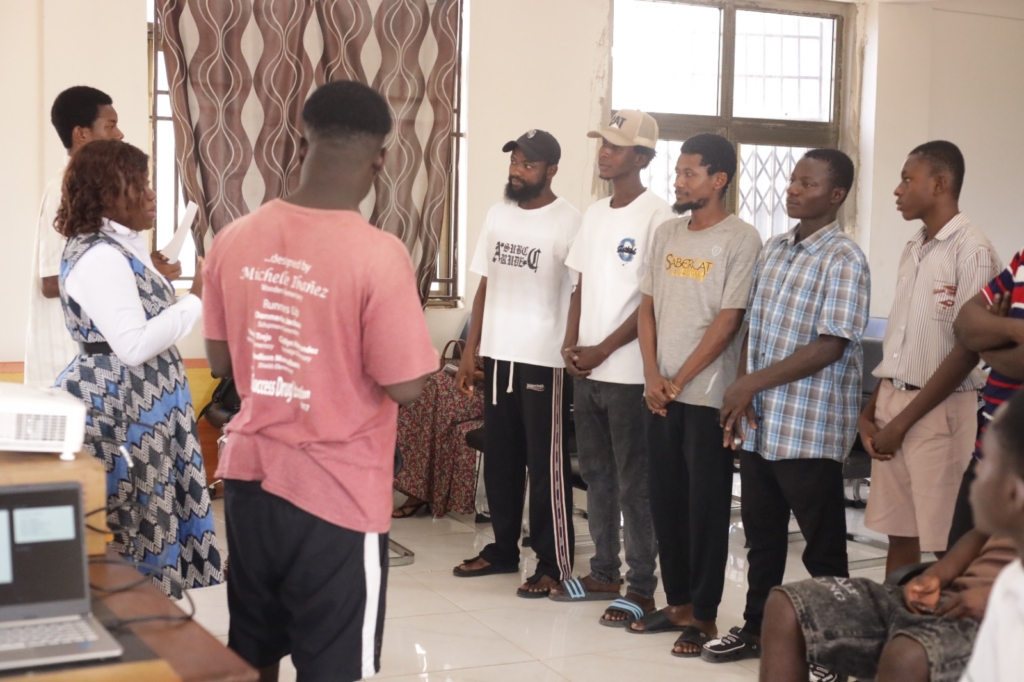
Regional Manager of the NPC, Mercy Adomaa Beseah, said the campaign has become urgent, especially after recent viral videos showed men physically attacking their partners—renewing the national debate on gender-based violence.
“We see many cases of boys using power to harm girls,” she said. “If we do not go to the roots, the girls face the impact. Abuse becomes normal. It leads to teenage pregnancy, emotional harm and long-term instability.”
She explained that the programme focuses on boys aged 13 to 19, especially those out of school, who often lack structured guidance.
“The one in school is guided to some extent. The one out of school is influenced by peers and has no coaching. That is why we focused more on them,” she noted.
Ms. Beseah stressed that Ghana’s long-standing focus on empowering girls has left a gap that must now be addressed.
“If a woman grows strong but stays with a man who has no guidance, the home becomes chaotic. We need both boys and girls to understand responsibility,” she said.
Officials also highlighted how inadequate communication at home contributes to harmful behaviours. Many parents, they said, rarely discuss emotions, respect, peer pressure, or sex with boys.
At the event, the Ghana AIDS Commission drew a link between harmful masculinity and risky sexual behaviour. Olivia Graham, Technical Coordinator for the Commission in the Ashanti Region, said unsafe sex remains the main driver of HIV infections among young people.
“The main route of HIV transmission is unprotected sex. Young people need to know their status. Testing takes 15 minutes,” she told the boys.
She cautioned that early sexual activity, multiple partners, and silence around sexual health continue to fuel infections among those aged 15–24.
“It is not a death sentence, but prevention is better. Abstinence works. Condoms work. And treatment works when someone tests early,” she added.
The Department of Gender, represented by Acting Regional Head Ama Nyanta Boateng, said the training is designed to help boys reflect on how violence begins and how to prevent it.
“We want them to promote positive masculinity. Abuse among adolescents is common. If they understand respect now, it reduces violence later,” she said.
The NPC says the regional tour will continue in the coming weeks as officials engage more communities. According to Ms. Beseah, sustainable change depends on involving boys early—not only girls.
“We want both boys and girls to grow into adults who can live together without abuse. If we fail to guide boys, all the progress with girls will disappear,” she said.
- President Commissions 36.5 Million Dollars Hospital In The Tain District
- You Will Not Go Free For Killing An Hard Working MP – Akufo-Addo To MP’s Killer
- I Will Lead You To Victory – Ato Forson Assures NDC Supporters
Visit Our Social Media for More
About Author