The recent refusal of doctors to accept postings to deprive areas in Ghana is very worrying. This has a very high potential to cause increased morbidity and mortality in these areas.
The lack of doctors in the affected facilities will compel the people in the catchment areas to travel long distances to access healthcare. This will therefore create geographical and financial inaccessibility.
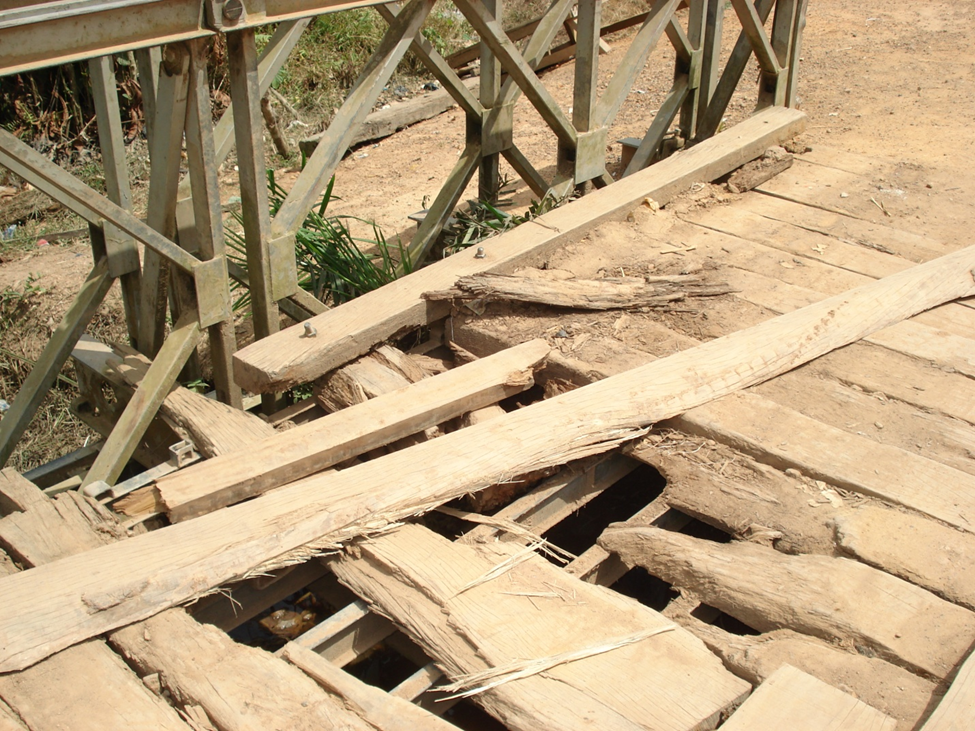
Indeed, even when the current available hospitals in Ghana are functioning, people still encounter geographical barriers due to bad roads; travelling through rough terrains.
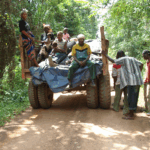
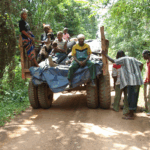
For instance, a friend and I had a very terrible experience when we tried to drive from Samreboi to Prestea in the Western Region. We had to abandon the journey because only tractors could use the road at the time (please see attached pictures). This geographical barrier, coupled with lack of doctors, has a high tendency to increase morbidity and mortality.
About 18 years ago, a woman who was bleeding during pregnancy (a condition called Antepartum haemorrhage – APH) in a village near Sefwi Juaboso died on her way to Sefwi Wiawso Government Hospital.
This was because there was no functioning hospital in Sefwi Juaboso and there was no Doctor on duty at Sefwi Asafo Hospital which is about midway between Sefwi Juaboso and Sefwi Wiawso (Dr. Samuel Osei-Nketiah. Make Juabeso Hospital Functional. Daily Graphic – February 9, 2007).
Again, in 2011, another woman died from bleeding after delivery (a condition called postpartum haemorrhage – PPH) on her way to 37 Military hospital. This woman started bleeding after delivery in Afienya.
She was rushed to Tema General Hospital, but because there was no doctor on duty, the relatives decided to continue to the 37 Military hospital. Unfortunately, she died on her way (Dr. Samuel Osei-Nketiah.
System Failure at Tema General Hospital. Daily Graphic – November 15, 2011). Similarly, in 2014, another woman died in Komfo Anokye Teaching Hospital (KATH) due to severe bleeding after delivery at Nkawie Government Hospital in the Ashanti Region.
There was no doctor at Nkawie Government Hospital to resuscitate her and there was delay in getting an ambulance. She therefore developed a severe complication called disseminated intravascular coagulation (DIC) before she arrived at KATH.
Consequently, she succumbed to the complication (Dr. Samuel Osei-Nketiah. Maternal mortality: The impact of ‘no doctor syndrome’. Daily Graphic – June 25, 2014)
Indeed, the aforementioned cases are just a few of the avoidable deaths that occur in Ghana due to lack of Doctors, geographical inaccessibility or financial inaccessibility.
POSSIBLE CAUSES
1. Lack of Differential Salaries and Incentives
Based on my interaction with other doctors, the lack of differential salary and incentives are key factors that prevent some doctors to accept posting to the deprived areas. In my personal experience, I worked in Tarkwa Government Hospital as medical officer for almost five (5) years from January 2000.
We were only two; the other doctor being my boss. Most of the time, I worked for almost 24 hours; working as a physician, paediatrician, a surgeon, obstetrician and a gynaecologist. Indeed, at a point in time, I was alone for almost one year when my boss travelled.
During that period, I worked for almost 24 hours every day. However, I only received salary based on my grade without any recourse to the workload and the excessive extra hours.
What kept me working was my conscience, empathy, passion and the desire to serve humanity. There was no government policy that would keep one to work under such conditions.
Again, I worked alone at the Sefwi Wiawso Government Hospital for almost two (2) years from October 2004; working almost 24 hours every day without any government incentive. The only incentive was my conscience, empathy, passion and the desire to serve mankind.
2. Fear of Being Locked Up
Most young doctors are afraid of the possibility of getting locked up in the rural areas. People have complained of not being released to go to other facilities or to enter into postgraduate training.
Story is told of some directors requesting the doctor to get a replacement before he or she would be released to leave; thereby preventing them from progressing.
3. Poor Up-Bottom Communication and Neglect of Doctors in Deprived Areas
Another possible factor is neglect of doctors in the rural areas. There is usually poor communication to those in the rural areas. For instance, when I was in Tarkwa Government Hospital, interview for promotion was conducted without my knowledge.
It was a colleague who later hinted me; and I had to call the regional director of health services to complain. He then asked me to come the following day which was supposed to be the last day and had been slated for nurses.
Again, when I was in Sefwi Wiawso Government Hospital, I never received any official information whenever application was opened for postgraduate entrance examination. Indeed, in the year I wrote my entrance examination, it was a friend who told me application had been opened for a long time.
At the time I was submitting my application, acceptance of application had been closed and I had to fight for mine to be accepted. Those in the regional capitals tend to get more information and opportunities than those in the rural areas.
Scholarships are usually given to those in the regional capitals. This is what I observed when I was in the Western Region.
4. Lack of Good Basic Schools
One of the reasons some doctors refuse posting to the rural areas is lack of good basic schools for their children. Over the years, most doctors I have interviewed and discussed posting to the rural areas give this as one of their reasons they would not accept posting to the rural areas.
I recently interviewed one doctor and that was her response too. It should be noted that people from these communities have excelled academically; and the recently ended 2025 National Science and Mathematics Quiz testifies to that.
Indeed, some of us attended rural basic and secondary schools. In 2024, a student from Kade Senior High Technical School (Henschel Tabi Frempong-Manso) was ranked 2nd best WASSCE candidate in West Africa (www.ghanaweb.com; Tuesday, 1st July, 2025).
Again, a valedictorian at the university of Ghana 2024 graduation (L/Cpl Nyarko Obeng) attended Adanwomase Senior High School (www.ghanaweb.com; Monday, 29th January, 2025).
However, most doctors fear it would be a disadvantage to send their children there; though the hospitals are mostly in the district capitals.
5. Lack of Passion, Ethics, Empathy and the Desire to Serve Humanity
It is becoming abundantly clear that most doctors are not in the field with passion, empathy and the desire to serve mankind. Most place their personal interests above that of the patients they have been trained to take care of.
These personal interests are myriad; and examples are not limited to those enumerated above. Extortion from patients has become rampant. Ironically, most of these doctors claim to be religious; most being Christians and Muslims.

SOLUTIONS
1. Differential Salaries and Incentive Packages
It should be noted that, most doctors nowadays are looking for an incentive that will attract them to the deprived areas. Government should therefore look for ways of incentivising posting of doctors to the rural areas.
This could be in the form of differential salaries, car and housing loans with low interest rates, duty waiver for cars and scholarships.
A German doctor once told me that, doctors in the rural areas in Germany get more salary than those in the cities. In view of that, he said, most young doctors prefer to go to the rural areas for a while; and they come back to the cities when they have made enough money. I think adopting this strategy in Ghana could help drive doctors to the rural areas.
A sliding rule can be used for the car and housing loans and duty waivers. For instance, if a doctor works in a rural area, he or she will qualify for duty waiver/car loan after 2 years whist those in the cities will have to work for 10 years before qualifying.
For the housing loan, those in the rural areas will qualify after working for 5 years whist those in the cities may qualify after working for 20 years.
Those in the rural areas should be given preference whenever there is a scholarship programme and this should be done with honesty, transparency and without favour.
Doctors in the rural areas could be offered free accommodation and allowances for utilities as incentives.
Other healthcare workers in the rural areas could also be given similar incentives.
2. Policy to Allay the Fear of Being Locked Up
Clear government policy should be developed to lay down clear pathways for those who accept posting to the rural areas. The conditions one should satisfy before qualifying for transfer or release for postgraduate training should be spelt out and guided by a written document made readily available to every doctor and all other stakeholders.
This will avoid abuse of power by the directors in the hospitals, districts and the regions. Similar policy could also be developed for other health workers who accept posting to the rural areas.
3. Strengthening of the Policy on District Posting Before Postgraduate Training
This policy on district posting for at least two years before admission into postgraduate training with salary should be strengthened and enforced. Those who serve the two years should not face any impediment to enter into postgraduate training.
This will create a cycle of doctors to the rural areas. However, those without the minimum of two years district posting could enter into training without salary.
4. Effective Communication Channels
The regions should developed effective communication channels to ensure that doctors in the rural areas are not left out. This may be in the form of regional email platform, WhatsApp and Telegram platforms and information should be disseminated promptly and transparently.
5. Establishment of Quality Basic Schools in the Districts
Government should assist the district assemblies to build quality schools in the districts. The models used by the University of Ghana basic school, Volta River Authority basic school in Akosombo, the Armed Forces basic schools and the Korle-Bu Teaching Hospital MOH basic school can be studied to ensure quality teaching. Similarly, the models of well known good private schools could be studied.
6. Teaching of Ethics from basic Schools to University and Teaching of Religious Ethos from Childhood
As stated earlier, most doctors have thrown out ethics and religious ethos. There is loss of passion, empathy and desire to serve humanity although most doctors portray themselves as religious; most of us being Christians and Muslims.
Despite the plethora of teachings in the Holy Bible and the Holy Quran admonishing us to serve humanity, it is not reflecting in our lives.
Quotations in the bible include 1 Peter 4:10-11, Romans 12:10, Matthew 25:35-40, Ephesians 6:7-8, Mark 10:45 and Colossians 3:23-24. Quotations in the Quran include Quran chapter 2:215 and chapter 2:277.
Teaching of ethics and religious ethos would help reverse this negative trend. Indeed, my desire to go extra mile to serve humanity emanated from what I learnt about Confucius in primary school and the religious ethos I learnt as a catholic during catechism in my primary school days.
One of the sayings of Confucius I learnt in primary school (Do Unto Others What You Wish Others to Do Unto You) has always been my guiding principle in my quest to serve humanity.
I have always wished to serve the deprived and the vulnerable; and I have always wished to send the services to the door steps of the deprived and vulnerable. In 1998, after our first two internship/housemanship rotations at the Korle-Bu Teaching Hospital (KBTH), our year group was asked to continue with the other two rotations at the KBTH instead of going to the regional hospitals.
However, because of my desire to get closer to the people in the rural areas, I opted to leave Korle-Bu. I therefore went to Effia Nkwanta Regional Hospital (ENRH) in Sekondi-Takoradi of the Western region of Ghana in October 1998. Indeed, I was reluctantly released by KBTH.
After my other two rotations in ENRH, I willingly went to the regional director to post me to the district upon which I was posted to Tarkwa in January 2000; and from there to Sefwi Wiawso in October 2004 from where I left to start postgraduate training in October 2006.
Working in these areas offered me tremendous benefits; gaining a lot of medical and administrative skills.
Another principle that has guided me is the desire to serve Ghana since the people of Ghana directly and indirectly helped me to achieve my dream of becoming a doctor. Indeed, in the year 2000, a friend in the United States of America offered to sponsor me to move to the USA, but I declined.
Again, in 2017, an immigration officer at an airport in the USA was convincing me to come and work in the USA. I told him I would think about it. He accordingly gave one year of stay even though I had told him I was going to be there for about 6 weeks.
After my residency training, I would have gone back to the district, but my boss and the head of department told me to stay and assist in training medical students and residents (postgraduate students). After pondering over it, I saw it as a form of service to humanity.
The hospital therefore sent a request to the Ministry of Health for my retention at the KBTH and this was accordingly granted. That notwithstanding, I still try to get closer to the deprived and vulnerable by joining an NGO or individuals with my own car and fuel to render free surgical care in the districts.
Serving humanity, especially the deprived and vulnerable, is very fulfilling and gratifying. I would therefore like to entreat the doctors to reflect on their decisions.
They could accept the postings for at least 2 years. It should be noted that practicing medicine goes beyond consulting and prescribing; and this can be appreciated when the definition of health by World Health Organisation is critically analysed.
There are instances patients are assisted financially and psychologically. There are occasions one would drive to town with patients or relatives to retrieve their money from pharmacy attendants who had initially refused to refund or replace drugs they had wrongly dispensed.
Indeed, one has gone beyond the consulting rooms and wards to assist patients in so many ways that have tremendously contributed to the healing process of patients: and the aforementioned are just a few.
This opinion piece was written by:
Dr. Samuel Osei-Nketiah, Paediatric Surgery Unit, University of Ghana Medical Centre, Legon, Accra.
- President Commissions 36.5 Million Dollars Hospital In The Tain District
- You Will Not Go Free For Killing An Hard Working MP – Akufo-Addo To MP’s Killer
- I Will Lead You To Victory – Ato Forson Assures NDC Supporters
Visit Our Social Media for More
About Author