Ghana is currently experiencing what should be a moment of economic optimism. Inflation has been on a steady decline throughout the first half of 2025, and for the first time in years, there’s a glimmer of macroeconomic stability.
Deloitte and the IMF are both projecting single-digit inflation by year-end, with the IMF forecasting as low as 8%. In June 2025, annual inflation dropped sharply to 13.7% from 18.4% the previous month. Month-on-month prices fell by 1.2%, a sign that the macro indicators are heading in the right direction.
The Ghanaian Cedi has also made an extraordinary comeback. It appreciated by 42% against the U.S. dollar, 30.3% against the British Pound, and 25.6% against the euro. The exchange rate moved from a staggering GH¢17 (November 2024) to GH¢10.30 (June 2025) on the interbank market—gains not seen in recent memory.
In theory, this is great news. In reality, though, many Ghanaians are asking a very simple question: Why isn’t any of this reflecting in the market?
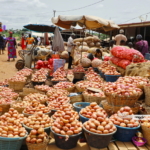
Essential goods like home-grown foodstuffs, cement, and building materials continue to see price hikes or remain stubbornly high. A recent PwC survey confirms the disconnect: 45% of respondents said the inflation decline is not translating into real-life relief. This raises a critical question for the government and policymakers: What good are strong macroeconomic numbers if ordinary people still can’t afford basic necessities?
Falling Inflation, Rising Food Prices
The issue lies in the structure of our food systems. Food inflation remains high because, despite the consistent drop in the rate of price increases, prices themselves are still increasing, albeit at a slower pace. That’s partly due to the lingering effects of earlier high production costs, seasonal supply fluctuations, and deep-rooted inefficiencies in local supply chains.
But one cannot ignore the human element: the disproportionate control wielded by market queens and middlemen over Ghana’s food distribution system. These actors dictate prices, quantities, and even the flow of goods from farms to market stalls. Their stranglehold on the food chain is so strong that it shapes what’s available to consumers and at what cost.
The World Food Program estimates that Ghana loses about $2 billion annually to post-harvest losses, largely due to poor storage and processing capacity. Yet this inefficiency thrives in part because it supports a system of price manipulation and limited accountability.
Other key drivers of high prices include unregulated cost of delivery services and galamsey. Delivery charges are often arbitrary—sometimes exceeding the cost of the item itself—due to a lack of regulation, allowing vendors and dispatchers alike to set prices at will.
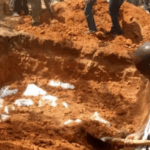
Galamsey activities continue to devastate arable land, turning fertile fields into deep pits, reducing available land for farming, and affecting soil quality as well. This degradation, along with water contamination and labour shifts from agriculture to mining, has cut food production, driven up prices, increased reliance on imports, and worsened food insecurity.
Many of these powerful market actors are politically connected, making it difficult for successive governments to decisively intervene.
Even cement prices, which are not directly food-related, are telling. As the Roads Minister, Kwame Governs Agbodza, recently asked: Why is a bag of cement still selling for GH¢120 when macro conditions should support a price closer to GH¢95 who is benefiting from these inflated prices?
The answer is clear—not the ordinary Ghanaian.
What Must Government Do?
This is not just an economic dilemma; it’s a governance challenge. If falling inflation and a strong Cedi aren’t reducing the cost of living, then there is something fundamentally wrong with the system —and that needs fixing.
Here’s what the government should consider doing to make the macroeconomic gains translate into market reality:
Scale Up Social Interventions
Immediate relief is crucial. Programs like the Livelihood Empowerment Against Poverty (LEAP) and food vouchers must be expanded and more efficiently targeted. These should be linked to community-level food distribution systems that bypass exploitative market channels.
Boost Local Food Production
Ghana must address the root cause of food price instability—insufficient domestic supply. This requires investment in irrigation to extend growing seasons, support for mechanisation, access to quality seeds, and robust extension services for farmers.
Reduce Post-Harvest Losses
Up to 30% of food produced in Ghana is lost due to poor storage and bad roads. Building feeder roads and cold storage facilities will stabilise prices and improve food availability year-round.
Promote Agro-Industrialization
We must move beyond raw food production. Agro-processing adds value, creates jobs, and reduces our dependence on imported products. Tax incentives, affordable credit, and support for farmer cooperatives can help Ghanaian agribusinesses scale up and compete.
Break the Market Monopoly
The National Buffer Stock Company (NAFCO) must be empowered to disrupt exploitative supply chains. By buying directly from farmers and distributing efficiently, NAFCO can challenge the dominance of market queens and stabilise prices.
Improve Policy Coordination and Market Monitoring
The Ministry of Food and Agriculture should set up a Price Monitoring and Forecasting Unit to provide real-time data for proactive planning. Ghana must also coordinate with ECOWAS to facilitate food trade and prevent artificial shortages.
Adopt a Focused Import Substitution Strategy
Strategic investment in crops like rice, maize, tomatoes, and poultry can help Ghana move toward food self-sufficiency. Well-designed protectionist measures can give local industries the breathing room to grow and compete.
Enforce Mining Laws & Restore Degraded Lands
Government must empower security agencies and mining regulators to enforce laws impartially, with a focus on protecting agricultural lands and forest reserves. Additionally, targeted land restoration initiatives should be implemented to reclaim degraded areas.
Conclusion: A Moment to Act
Ghana stands at a crossroads. The economy is finally showing signs of macro-stability, but the real test lies in translating those gains into everyday affordability. Falling inflation and a resurgent Cedi mean little if market prices remain high due to inefficiencies, monopolies, unchecked profiteering and nefarious activities of galamsey operators.
This is not a simplistic matter of economics—it’s a matter of political will. It’s time for bold leadership that tackles food price inflation not just as a number on a chart, but as a lived reality for millions of Ghanaians. If the government acts now—reducing production costs, strengthening food systems, and cutting import dependency—Ghana can build a resilient, inclusive, and self-sustaining economy.
The opportunity is here. The question is: will we take it?
- President Commissions 36.5 Million Dollars Hospital In The Tain District
- You Will Not Go Free For Killing An Hard Working MP – Akufo-Addo To MP’s Killer
- I Will Lead You To Victory – Ato Forson Assures NDC Supporters
Visit Our Social Media for More
About Author