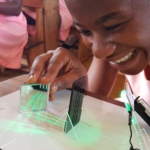

The Mankranso Senior High School and community were thrown into a state of frenzy after contestants of the school clinched a historic feat at the 2025 National Science and Maths Quiz – an annual competition held for senior high schools in Ghana.
The quiz tests both the theoretical and practical knowledge of participating students on biology, physics, chemistry and mathematics in what many argue are some of the most intense academic showdowns at the second-cycle level of education.
Facing off some of the country’s academic giants, the school exhibited dexterity to book a historic and debut semi-final slot at the national competition.
Entering this year’s tournament as one of the underdogs, the category C school, based in the Ahafo Ano southwest district in the Ashanti region, defied the deplorable state of science education at their school to achieve the milestone.
Within the four walls of the school located along the Kumasi-Sunyani highway is a stark reality every science student of the school must endure – inadequately resourced science laboratories which teachers describe as “archaic”.
Sitting in the middle of the school, the dedicated laboratories found in what is commonly referred to as “boys’ quarters” are a painful reminder of what science facilitators/teachers at the school must endure.
From lesser benches and stools to the fewer apparatus sitting in cabinets, practical sessions for chemistry, physics and biology are rather herculean than students burying their heads in books to simply grasp a concept in science.
The worrying state of resources at the school nearly whisked away the dreams of many students to become prominent scientists and researchers.
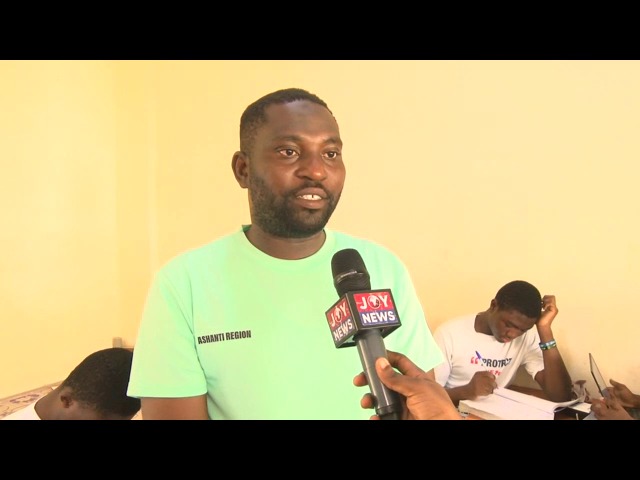
For the coordinator of the quiz team, Ibrahim Yussif Ofori, the deplorable state of the school compelled him to dedicate his time and resources to push the team to the national quiz.
“The facilities here are horrible. I decided to lift the school to a certain stage where we could get the platform to sell the school to the government, philanthropists and other stakeholders,” he revealed.
“Some of the teachers call this place an advanced Junior High School. It doesn’t meet the criteria for SHS,” he added.
For years, students who have walked through the school have had to work more to chalk successes in their external and final examinations as compared to their peers in schools located in urban centres and well-resourced.
The situation at Mankranso SHS is one of the many cases of science education across senior high schools in Ghana.
STEM education, local research, low funds
Science, Technology, Engineering and Mathematics (STEM) education has long formed part and parcel of Ghana’s transformational education agenda. While successive governments aimed at transmogrifying the economy and developing the nation for the fourth industrial revolution, the conduit for achieving a developed state falls short.
Teaching and pursuing STEM education aren’t the only headaches plaguing the country; investments in local research and development (commonly referred to as R&D) are nothing to write home about.
The Council for Scientific and Industrial Research Act, 1996 re-established the body governing over 13 research institutes to promote, encourage and regulate research and the application of science and technology in development and to provide for related matters.
But the government research institute is forced to depend on foreign donations to conduct tailor-made investigative works for national development.
A scientist with the Crops Research Institute under the Council for Scientific and Industrial Research (CSIR-CRI), Dr Felix Frimpong, looked on desperately at his rice plantation grown on a parcel of land at the institute as he hoped for more funds to scale up his research work. His years of investigating growing rice on dry land have only sat on the land it has always known, waiting to be introduced to farmers to enhance productivity.
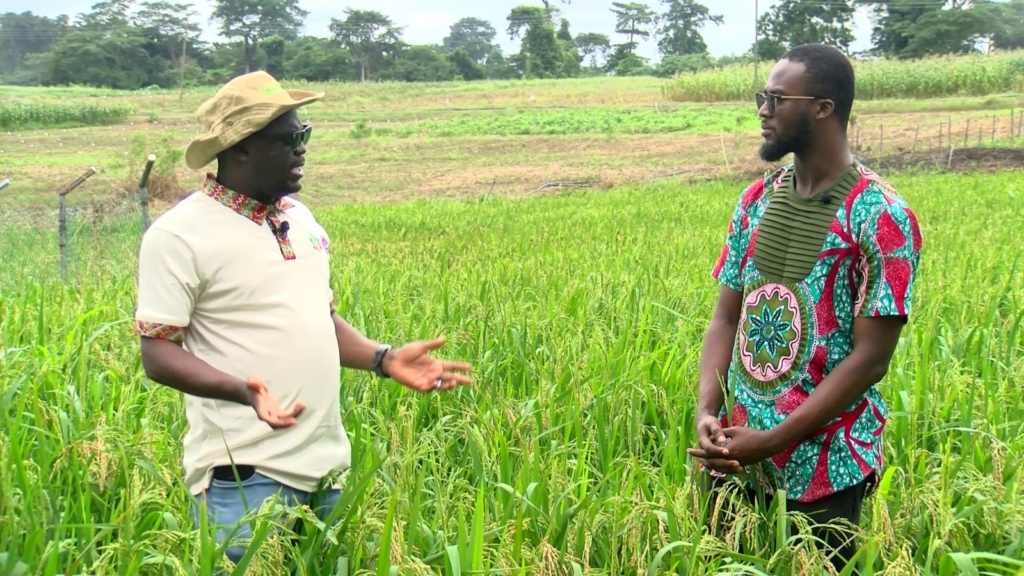
But with no funding, he speaks passionately, “We need funds to escalate these works to the farms. We can’t only research them here and leave them on the field without the farmers benefiting. The government must invest more in research and development”.
Dr Frimpong recently led a team of both international and local researchers to grow Ghana’s first wheat grain.
“Because there is no governmental support, we’ve been convinced that wheat cannot grow in Ghana. Meanwhile, we have seen wheat growing in the country. Our local challenges can only be solved with our own peculiar abilities,” he noted.
Illicit Financial Flows are robbing STEM education and research
One of the means the country continues to lose funds, which could actually be sealed to generate more revenue to support local research and science education, is the infamous Illicit Financial Flows.
Ghana loses an estimated 1.4 billion dollars due to illicit financial flows, depriving the nation of critical development and science education, and research and development are no exception.
In Ghana, Illicit Financial Flows show its face through money laundering, tax evasion, under-invoicing, internet fraud, the extractive industry and the real estate sector.
The channel: how IFFs translate into fewer classrooms, labs and researchers
· Lost tax revenue translates to a smaller public purse: IFFs reduce the government’s (tax) revenue, shrinking what’s available for public services, including education and research. Studies explicitly link trade mis-invoicing and other IFFs to measurable tax revenue losses in Ghana. The Informal/illegal sectors worsen the cycle. Smuggling and undervaluation (notably of gold) both drain state coffers and create governance problems that deter responsible investment.
· Chronic underfunding means brain drain & low private R&D: Weak public support discourages private sector R&D partnerships and pushes talented researchers abroad, which shrinks the domestic innovation ecosystem and reduces future taxable growth. Ghana is losing in droves its local researchers to Western countries.
· No research independence: The country is unable to own most of its research because of reliance on foreign donors for funding. The donors tend to own the entire projects, focusing local scientists to only squeeze portions of the works tailored towards the local needs.
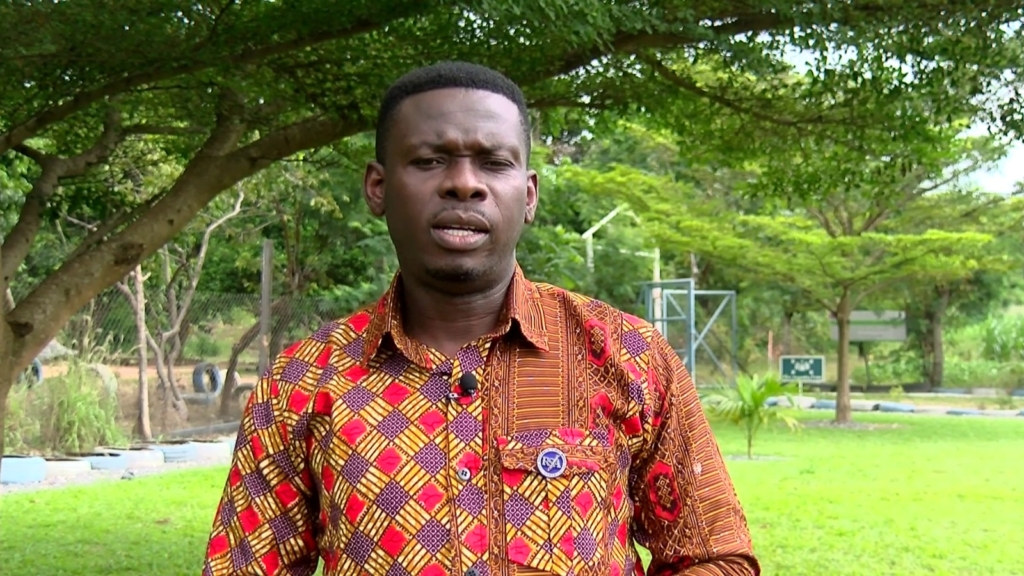
Ing. Dr Shadrack Kwadwo Amponsah
Immediate past President of the Research Staff Association of the Council for Scientific and Industrial Research, Ing. Dr Shadrack Kwadwo Amponsah, shares that inadequate funding is throwing many researchers’ interests into other fields as they chase funding to support research careers and livelihood.
“Any researcher that comes into the system that doesn’t get that support, they become prey to any of the donor funding. Some of us even end up switching from our main specialisation, and that is not good. So, you realise that we are doing bits and pieces of everything to stay relevant,” he noted.
The arithmetic that bites
With open source data using recently published estimates and Ghana’s 2024 GDP of approximately US$82.8 billion, I made an extrapolation on how Illicit financial flows could be denying the country’s research and development (R&D) the needed funding.
The gross domestic spending on R&D in Ghana hovers around 0.38% of GDP, equivalent to about 315 million dollars a year. The United Nations Educational, Scientific and Cultural Organisation (UNESCO) highlights this to be historical but indicative of low levels.
An influential estimate of trade-related IFFs for Ghana (2018) puts the value gap at US$1.78 billion for that year. If recovered, that sum alone equals ~565% of the current annual R&D budget — i.e., it would more than sextuple Ghana’s R&D envelope.
A 2025 report flagged Ghana lost about US$11.4 billion in gold exports over five years (2019 to 2024) through smuggling—roughly US$2.28 billion per year. That single component alone would be ~724% of the country’s current R&D spend if reclaimed.
For education, the Ministry’s spending in 2024 was about 3.12% of GDP, approximately US$2.58 billion. Recovering US$1.78 billion would therefore add the equivalent of ~69% of the current annual education budget — a near-doubling of available funds if fully redirected.
But what does this really mean on the ground?
For science students and local researchers, these monies amount to higher investments into STEM education and research and development.
1. Labs, equipment and consumables: Labs lack reagents, instruments sit idle, and maintenance is underfunded. Recovered IFF tax revenues at the scale above could fund national laboratory upgrades, recurring consumables, and maintenance for years — moving many institutions from “barely functioning” to “research-capable.”
2. Human capital/fellowships: A multiplied R&D pot means many more PhD and postdoc fellowships, graduate stipends, and incentives to keep STEM faculty rather than losing them to the private sector or emigration.
3. STEM in schools: With an extra 50–70% of the education budget, Ghana could dramatically expand practical STEM in secondary schools — equipment, teacher training, and science clubs — boosting early STEM participation and retention.
4. Applied research & industry links: Reliable funding could support translational research in agritech, materials, energy, and health that directly increases productivity and tax base — a virtuous loop that reduces future dependence on external funding.
The government has set up a National Research Fund with a seed fund of 50 million cedis and is expected to be operationalised in 2026. While many scientists deem this a step in the right direction, they believe more funds are needed to sustainably support the local research.
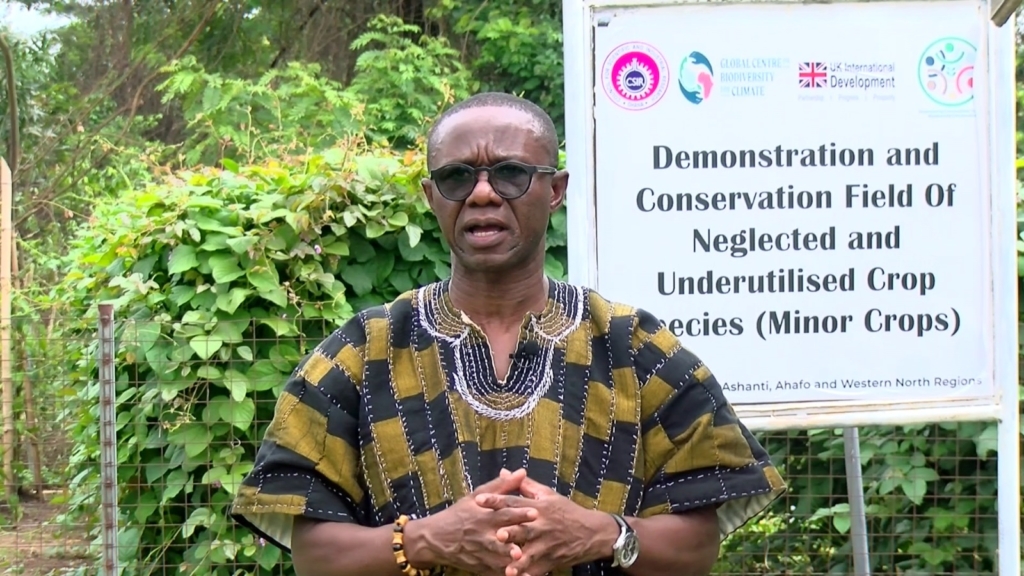
For Director of the CSIR-CRI, Prof. Maxwell Darko Asante, the funding for R and D is always an “afterthought”.
“Research funding should fit into the national agenda so that we know exactly that we are all working towards one national goal.
The ideal way is to have a budget for R&D & because the world now is very competitive,” he noted.
As many have believed, developed countries are where they are because they invested heavily in research. Ghana and Africa at large can only see the development they so yearn for if research and development become paramount in national budgets and revenue generation leakages like IFFs are sealed to channel resources into the sector.
The story received support from Oxfam in Ghana through DANIDA. Any financial assistance or support provided to the journalist has no editorial influence.
- President Commissions 36.5 Million Dollars Hospital In The Tain District
- You Will Not Go Free For Killing An Hard Working MP – Akufo-Addo To MP’s Killer
- I Will Lead You To Victory – Ato Forson Assures NDC Supporters
Visit Our Social Media for More
About Author