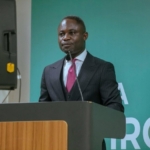
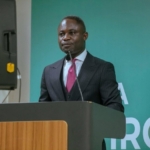
The colossal financial burden of the Zipline medical drone delivery service has been laid bare, with Health Minister Kwabena Mintah Akandoh confirming that the government is obligated to pay the provider more than $500,000 every month—regardless of how few medical supplies are delivered.
Speaking at the Government Accountability Series in Accra on Monday, December 1, 2025, the minister detailed the binding terms of the 2018 ‘take-or-pay’ sole-sourced contract, which continues to impose massive, fixed costs on the state budget.
The Half-Million Dollar Monthly Obligation
The contract, which commenced in 2019, requires a flat fee for each of the company’s operational hubs.
This fixed cost structure means the government cannot reduce its expenditure even if delivery services are underutilised or prioritised for non-emergency items.
Mr Akandoh provided the financial details:
“For every month, the government is supposed to pay $88,000 per centre. So with six centres, we are paying a little over $500,000 every month,” he said.
The minister described the agreement as a “sole-sourced contract” that effectively “binds government to continuous payments,” underscoring the lack of fiscal flexibility.
He stressed that while the current government is making crucial investments in public health, inflexible agreements like the Zipline contract continue to impose high and often criticised monthly costs on the state.
The Health Sector’s Transformation Agenda
Despite the contractual strain of the drone service, Mr Akandoh used the platform to highlight positive reforms across the health sector, backed by billions in investment:
1. NHIS Revival and Expansion
The Minister confirmed a major turnaround for the National Health Insurance Scheme (NHIS) following structural reforms:
- Prompt Payments: After the government uncapped the NHIS funding, payments to service providers have resumed promptly, effectively restoring provider confidence in the scheme.
- Subscriber Growth: NHIS coverage has seen a rapid increase from 18 million to about 20 million people in under a year, indicating public trust in the revitalised service.
2. Free Primary Healthcare and Non-Communicable Diseases
Looking ahead to 2026, the Minister announced a new pillar of public health strategy:
- Free Primary Healthcare: Government will introduce free primary healthcare next year, backed by a massive GH¢1.5 billion intervention fund. This will concentrate on preventive, promotive, and early-detection services integrated under the NHIS.
- Mahama Cares Fund: To combat the rising threat of non-communicable diseases (NCDs) like cancer, hypertension, and diabetes, the Ghana Medical Trust Fund (Mahama Cares) has been activated with GH¢2.3 billion and has begun providing patient support.
3. Workforce Deployment and Allowances
The Minister provided concrete data on the efforts to address critical healthcare workforce shortages:
- Nurses and Doctors: 13,500 nurses have been placed on the government payroll this year. Additionally, 700 medical doctors are actively being deployed across the country, prioritizing underserviced districts.
- Nursing Allowances: The government has cleared arrears, paying GH¢500 million in nursing training allowances, with a further GH¢231 million scheduled for release in early December.
The Health Minister’s presentation offered a dual picture: a sector undergoing massive, well-funded reforms in coverage and staffing, yet simultaneously struggling under the heavy, non-negotiable financial weight of legacy contracts like the Zipline drone service.
- President Commissions 36.5 Million Dollars Hospital In The Tain District
- You Will Not Go Free For Killing An Hard Working MP – Akufo-Addo To MP’s Killer
- I Will Lead You To Victory – Ato Forson Assures NDC Supporters
Visit Our Social Media for More
About Author