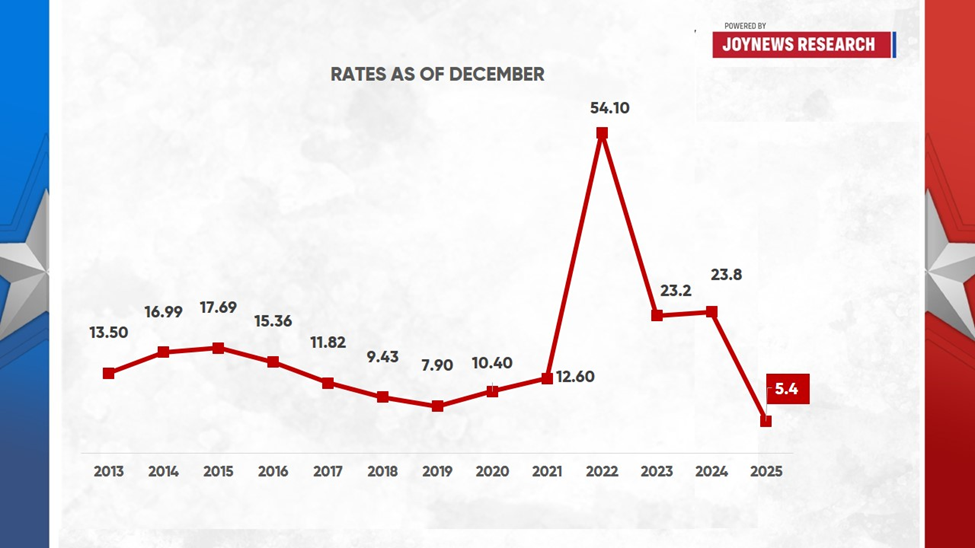
New data from the Ghana Statistical Service (GSS) shows that Ghana’s inflation rate fell to a historic low of 5.4% in December 2025, the lowest level in thirteen years.
This is 0.6 percentage points below the Bank of Ghana’s target range of 8% ±2%, marking the lowest rate the economy has seen in over a decade. The GSS reports that food inflation stood at 4.9%, while non-food inflation was 5.8%, making this the lowest overall inflation rate since the Consumer Price Index (CPI) rebasing.
Overview of Ghana’s inflation over the past 13 years
Ghana’s inflation has seen significant fluctuations over the last decade. Between 2013 and 2016, it remained in double digits, peaking at around 19% in 2016. From 2017 to 2019, inflation steadily fell to single digits, reaching 7.6–7.9% by late 2019. In 2020 and 2021, it rose moderately but stayed mostly below 13%. In 2022, inflation surged to a record 54.1% in December. Between 2023 and 2024, it declined from over 50% to around 23.8%. December 2025, however, recorded the lowest rate during this period, at 5.4%.
Why low inflation can be both positive and risky
Lower inflation boosts purchasing power, as consumers pay less for goods and services. It also brings price stability, helping businesses and investors plan for the long term.
However, if inflation remains below target for too long, it may signal weak demand in the economy, discouraging spending and investment. Very low inflation also increases the real burden of debt, making repayments heavier for households, businesses, and the government.
- President Commissions 36.5 Million Dollars Hospital In The Tain District
- You Will Not Go Free For Killing An Hard Working MP – Akufo-Addo To MP’s Killer
- I Will Lead You To Victory – Ato Forson Assures NDC Supporters
Visit Our Social Media for More
About Author