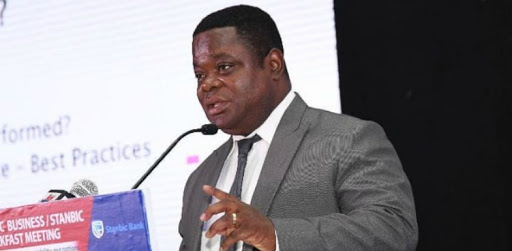
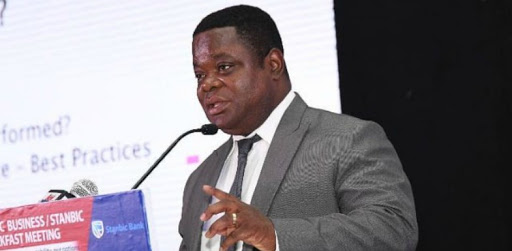
Director for Institute of Statistical, Social and Economic Research (ISSER), Prof Peter Quartey
Ghana’s economic outlook for 2023 appears promising, as indicated by the Institute of Statistical, Social and Economic Research (ISSER) in its latest review of the third quarter of 2023.
The report, released on October 31, 2023, anticipates a potential growth rate of 3.0% by the end of the year if current conditions persist.
The ISSER report is optimistic about the resilience of the agriculture sector and acknowledges the government’s efforts, particularly the Planting for Food and Jobs Phase 2 program, as factors that will contribute to the sector’s revival.
ISSER lauds the government’s youth in agriculture policies and expresses hope for their effective implementation.
Nonetheless, the report voices concerns about the rapid growth in expenditure, projected at 34.29% in 2023, and the need for more prudent spending.
ISSER warns about a substantial revenue-expenditure gap, amounting to 6.4% of GDP, equivalent to approximately GH¢5.47 billion.
On the subject of taxes, the report sounds a cautionary note, highlighting that “taxing production excessively is affecting industry, promoting imports, and worsening the already high unemployment situation.”
ISSER particularly emphasizes the impact of high taxes on food and beverages, which are fueling inflation, and it calls for a critical review of some of these taxes to address these issues.
In planning for the future, ISSER provides valuable advice based on past experiences, suggesting that lessons learned from the domestic debt exchange program should inform government spending habits leading into the 2024 elections.
With another election on the horizon, the report emphasizes the need to “Break the Political Business Cycle” of excessive election-year spending.
The report issues a warning about the consequences of the 30-40% haircut on Eurobonds, suggesting that this may negatively impact investor confidence for years to come.
ISSER advocates for a more prudent approach to spending, reduced taxes on production, the broadening of the tax base, stimulation of productive sectors, and a focus on responsible borrowing to ensure a sustainable and resilient economy.
DISCLAIMER: The Views, Comments, Opinions, Contributions and Statements made by Readers and Contributors on this platform do not necessarily represent the views or policy of Multimedia Group Limited.
- President Commissions 36.5 Million Dollars Hospital In The Tain District
- You Will Not Go Free For Killing An Hard Working MP – Akufo-Addo To MP’s Killer
- I Will Lead You To Victory – Ato Forson Assures NDC Supporters
Visit Our Social Media for More
About Author