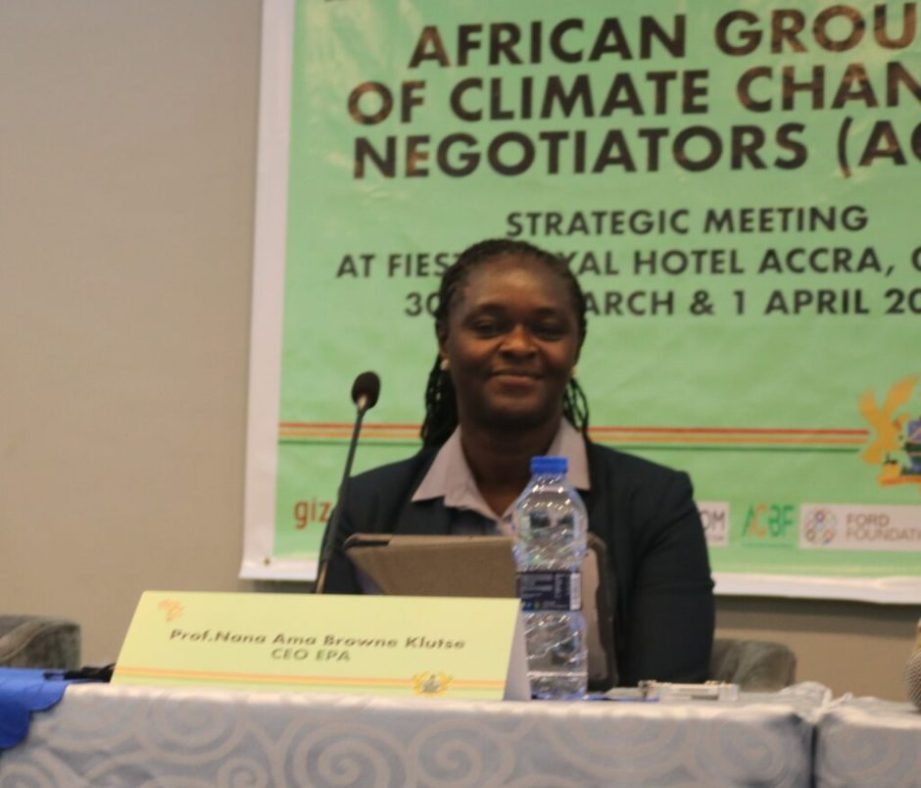
Ghana is hosting a three-day strategy meeting of the African Group of Negotiators (AGN), with climate experts and national focal points working to consolidate a unified African position ahead of COP31 in Turkey and COP32 in Ethiopia.
The meeting, running from March 30 to April 1, is the first in-person strategic session under Ghana’s chairmanship of the AGN—a milestone marked by the assumption of leadership by Nana Dr Antwi-Boasiako Amoah, the first Ghanaian to chair the group since the country signed the UN climate convention in 1992.
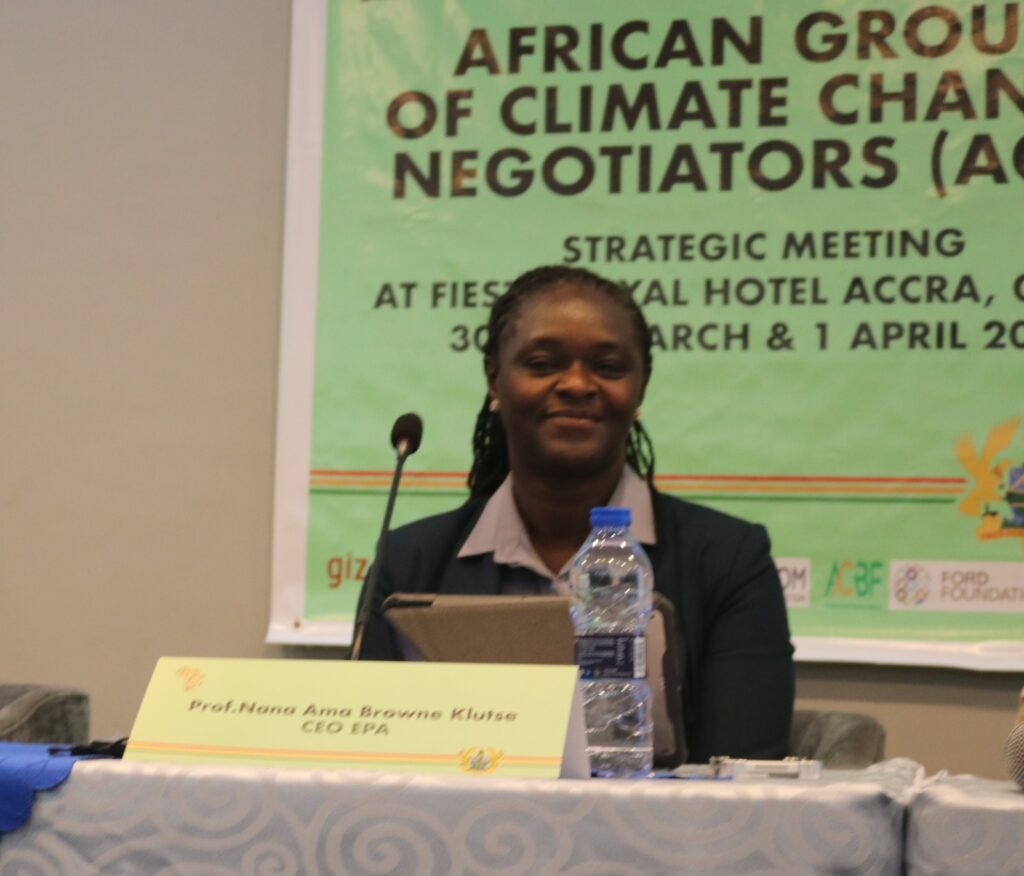
Welcoming participants, the Chief Executive Officer of the Environmental Protection Authority, Prof. Nana Ama Browne Klutse, said Africa’s influence in global climate talks depends on its ability to stay united. “Africa’s strength in global climate negotiations has always been its unity,” she said, describing the meeting as timely and essential in shaping Africa’s priorities ahead of the next two COPs.
Prof. Klutse noted that although Africa contributes the least to global emissions, it faces some of the worst climate impacts. She emphasised the need for equitable climate finance, stronger adaptation efforts, and fair access to technology and capacity-building support. The meeting is expected to produce a clear roadmap that strengthens coordination within the AGN and aligns the continent’s negotiating priorities.
Delivering the keynote address, Minister of State at the Office of the President for Climate Change and Sustainability, Baba Issifu Seidu, said the global climate process has entered a phase where countries are being judged on action rather than promises. He stressed that Africa must shift from being a passive participant to becoming “a driver of outcomes across all negotiation tracks.”
He highlighted Africa’s key focus areas, including measurable indicators for the Global Goal on Adaptation, securing adequate financing under the New Collective Quantified Goal (NCQG), and ensuring fairness in the Mitigation Work Programme—especially as countries pursue just energy transitions and economic transformation.
According to him, climate finance remains the most critical issue. Without sufficient and accessible funding, he warned, Africa’s adaptation and mitigation ambitions risk falling short.
The Accra meeting includes partner dialogues, thematic working sessions, and closed-door discussions to refine Africa’s negotiation instructions. Delegates will identify outstanding issues and assign responsibilities for follow-up actions covering the 2026–2027 negotiation cycle.
Civil society groups say these upcoming COPs may be decisive for Africa. Augustine Njamshi of the Pan African Climate Justice Alliance (PACJA) cautioned that “Africa cannot afford to treat COP31 and COP32 as routine negotiation cycles,” arguing that recent global decisions show that strong positions alone are not enough if they are not backed by strategy and collective action.
With Africa preparing to host COP32 in Addis Ababa next year, Ghanaian authorities believe the outcomes of the Accra meeting will help sharpen the continent’s voice. Government officials say Ghana remains committed to climate resilience and is advancing its own national adaptation plans and climate pledges, while encouraging deeper regional cooperation.
Participants are expected to issue concrete decisions and next steps as Africa works to secure stronger climate outcomes in the months ahead.
- President Commissions 36.5 Million Dollars Hospital In The Tain District
- You Will Not Go Free For Killing An Hard Working MP – Akufo-Addo To MP’s Killer
- I Will Lead You To Victory – Ato Forson Assures NDC Supporters
Visit Our Social Media for More
About Author