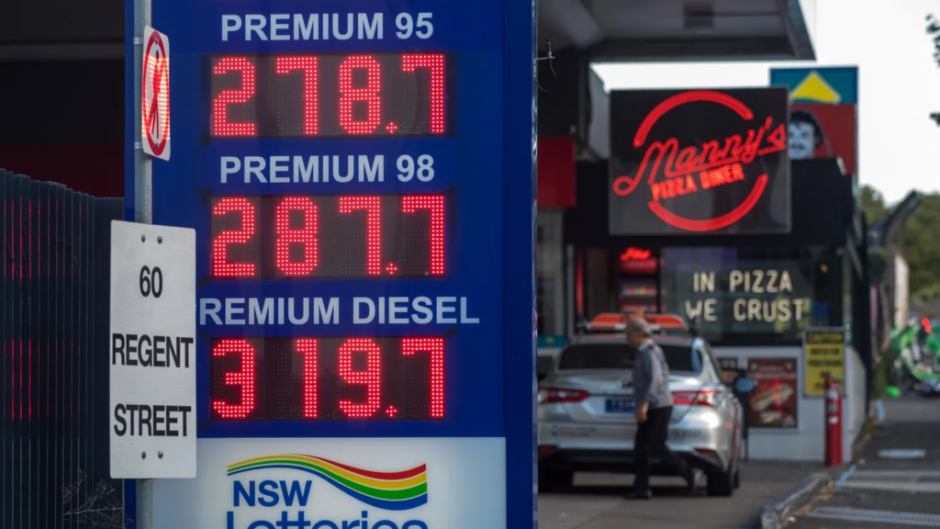
Two Australian states will offer free public transport to incentivise people not to drive as fuel prices soar due to the war in the Middle East.
Victoria, home to Melbourne, has said it will have free travel throughout April, while Tasmania has said commuters will not need to pay until the end of June. Other state governments have so far declined to follow suit.
It comes as the federal government announced it would halve the nation’s fuel excise tax for three months to ease pressure on motorists’ wallets.
Australia is among a host of nations that have seen fuel prices increase sharply since the start of the US-Israel war with Iran and the effective closure of the Strait of Hormuz.
The near-total blockade of international shipping in the vital waterway – through which around 20% of the world’s oil and natural gas flows – has led governments around the world to begin implementing measures to conserve fuel.
Australia’s Prime Minister Anthony Albanese has previously sought to reassure motorists following reports of panic-buying and petrol stations running dry.
His government on Monday said the fuel excise, a sales tax, will be lowered by 26.3 cents per litre for petrol and diesel, which should save drivers between about A$10 (£5.18, $6.87) and A$20 a tank.
The excise cut – which comes into effect on Wednesday – will cost the Australian taxpayer A$2.55bn.
Victoria Premier Jacinta Allan announced on Saturday that trains, trams and buses in the state would be free for all from Tuesday in a bid to drive down pressure on petrol pumps.
“This won’t solve every problem, but it’s an immediate step to help Victorians right now,” she said.
Meanwhile, the government of Tasmania – an island off the Australian mainland – announced people would be able to take its coaches, buses and ferries without charge for the coming few months.
“We know the rising cost of fuel is impacting the family budget, and that’s why we have again taken strong and decisive action to protect Tasmanians,” its Premier Jeremy Rockliff said.
Tasmania’s transport minister also noted that paid-for school buses would be made free, saving those who use them A$20 (£10.40) a week.
But other Australian states have demurred from similar actions.
NSW transport minister John Graham told broadcasters his state was keeping its “powder dry”. Graham said that offering free public transport would cost millions of dollars a day – money the government needs to help get the state through the crisis long term.
South Australia said it was expanding the number of senior travel cards while absorbing higher fuel costs, and a spokesperson for Queensland pointed to it introducing a flat 50-cent fare last February in comments to SBS News.
Similarly, Western Australia Premier Roger Cook said his state had already reduced fares. “Rick Astley was top of the charts when fares were this low in Western Australia back in the 80s,” he said.
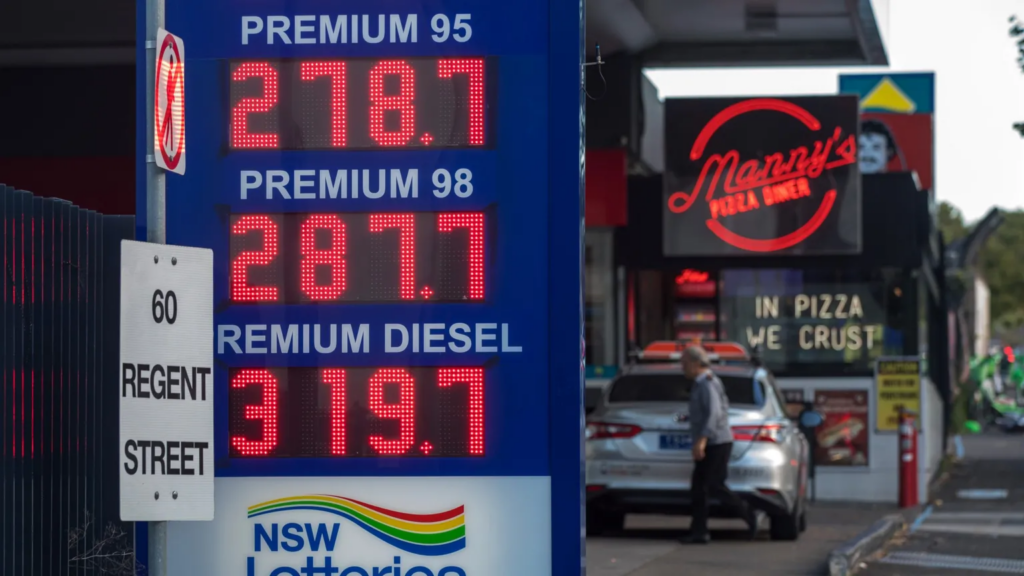
The average price of petrol in Australia had risen to A$2.38 a litre as of last Sunday, up from around A$2.09 when the war began a month ago, according to figures from the Australian Institute of Petroleum.
The Australian government says supply is not an issue – rather, sharp rises in the price of oil on the international market has had a knock-on effect on the price of fuels derived from it.
With only a trickle of cargo ships moving through the Strait of Hormuz without fear of being hit by Iran, there are concerns a prolonged blockage could have a wider impact on the global economy.
These rising costs have already led several other governments to implement fuel-saving measures.
Shops, restaurants and cafes in Egypt were told to close early from Saturday as part of a raft of measures that also included non-essential workers being told to work from home one day a week and increasing public transport fares.
At the same time, the Ethiopian government told state-owned companies and public institutions to place non-essential staff on leave so they would not travel into work.
On Tuesday, the Philippines declared a national emergency, with its government offering subsidies to transport drivers, reducing ferry services and implementing a four-day work week for civil servants.
- President Commissions 36.5 Million Dollars Hospital In The Tain District
- You Will Not Go Free For Killing An Hard Working MP – Akufo-Addo To MP’s Killer
- I Will Lead You To Victory – Ato Forson Assures NDC Supporters
Visit Our Social Media for More
About Author