ADVERTISEMENT
Get Started
  • About Homebase Tv | Hbtvghana.com
  • Advertise
  • Broadcast Live
  • Disclaimer
  • Privacy & Policy
  • Terms and Conditions
  • Vacancies
  • Contact Us – Connect With Us
Homebase Tv - Hbtvghana.com
  • Home
  • General News
  • Business News
  • Health
  • Life & Style
  • Politics
    • Press Release
    • Parliament
  • Sports
No Result
View All Result
  • Home
  • General News
  • Business News
  • Health
  • Life & Style
  • Politics
    • Press Release
    • Parliament
  • Sports
No Result
View All Result
Homebase Tv - Hbtvghana.com
No Result
View All Result
ADVERTISEMENT
ADVERTISEMENT

Cats became our companions way later than you think

Sun, Nov 30 2025 9:28 PM
in Ghana General News, International
cats became our companions way later than you think
0
SHARES
1
VIEWS
Share on FacebookShare on TwitterShare on TelegramShare on Whatsapp
ADVERTISEMENT

Cats became our companions way later than you think

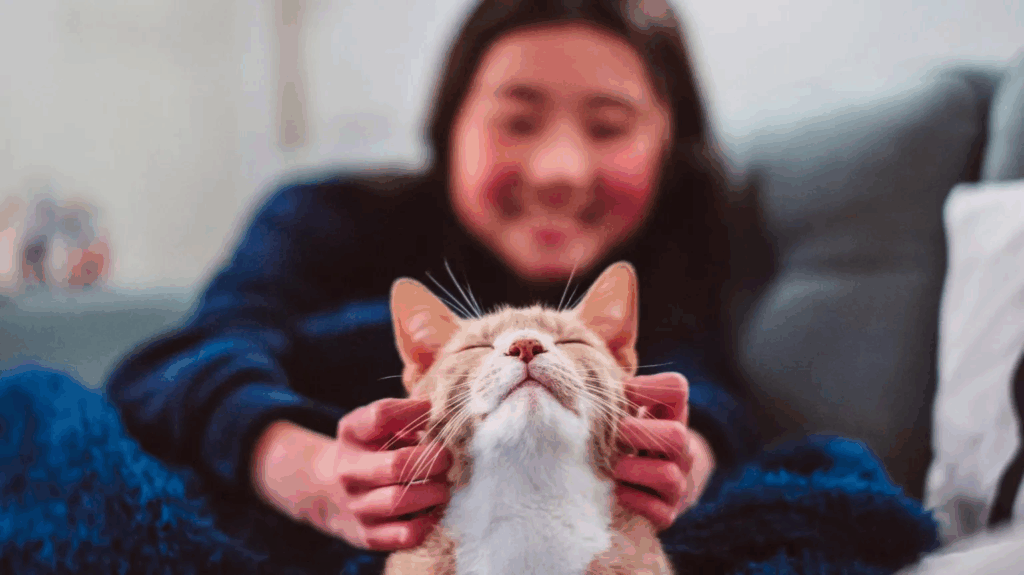
In true feline style, cats took their time in deciding when and where to forge bonds with humans.

According to new scientific evidence, the shift from wild hunter to pampered pet happened much more recently than previously thought – and in a different place.

A study of bones found at archaeological sites suggests that cats began their close relationship with humans only a few thousand years ago, and not in the Levant, but in northern Africa.

“They are ubiquitous, we make TV programmes about them, and they dominate the internet,” said Prof Greger Larson of the University of Oxford.

“That relationship we have with cats now only got started about 3.5 or 4,000 years ago, rather than 10,000 years ago.”
ReadAbout

US halts all asylum claim decisions after National Guard shooting

Benjamin Netanyahu seeks pardon from Israel’s president

Indonesia searches for hundreds missing in deadly floods

Cats became our companions way later than you think

All modern cats are descended from the same species – the African wildcat.

How, where and when they lost their wildness and developed close bonds with humans has long puzzled scientists.

To solve the mystery, researchers analysed DNA from cat bones found at archaeological sites across Europe, North Africa and Anatolia. They dated the bones, analysed the DNA and compared this with the gene pool of modern cats.

The new evidence shows cat domestication didn’t start at the dawn of agriculture in the Levant. Instead, it happened a few millennia later, somewhere in northern Africa.

“Instead of happening in that area where people are first settling down with agriculture, it looks like it is much more of an Egyptian phenomenon,” said Prof Larson.

This fits with our knowledge of the land of the pharaohs as a society that revered cats, immortalising them in art and preserving them as mummies.

Once cats became associated with people, they were moved around the world, prized as ship cats and pest controllers. Cats only reached Europe around 2,000 years ago, much later than previously thought.

They travelled around Europe and into the UK with the Romans and then started moving east along the Silk Road into China.

Today, they are found in all parts of the world, except Antarctica.
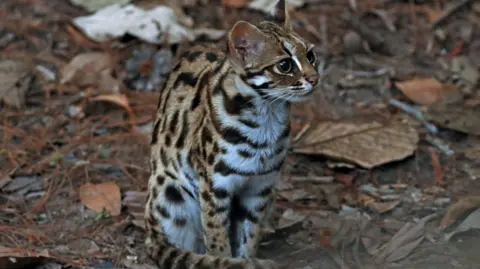
Getty A small leopard spotted wild cat crouches on a bed of leaves looking away from the camera
The leopard cat is the most widespread wild cat in Asia

In a new twist, the scientists discovered that a wild cat had been living among people in China for a long time, long before domestic cats arrived on the scene.

These rival kitties were leopard cats, small wild cats with leopard-like spots, that lived in human settlements in China for around 3,500 years.

The early human-leopard cat relationship was essentially “commensal”, where two species live alongside each other harmlessly, said Prof Shu-Jin Luo of Peking University in Beijing.

“Leopard cats benefited from living near people, while humans were largely unaffected or even welcomed them as natural rodent controllers,” she said.
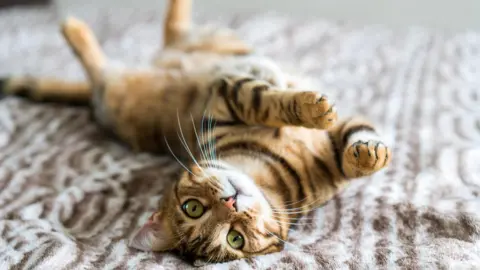
Getty A young cat with a tabby coat lies on its back on a rug looking up with big green eyes
The Bengal cat is a breed of hybrid cat created from crossing an Asian leopard cat (Prionailurus bengalensis) with domestic cats

Leopard cats did not become domesticated and continue to live wild across Asia.

Curiously, leopard cats have recently been crossed with domestic cats to produce Bengal cats, which were recognised as a new breed in the 1980s.

The research is published in the journal, Science and in Cell Genomics.

  • President Commissions 36.5 Million Dollars Hospital In The Tain District
  • You Will Not Go Free For Killing An Hard Working MP – Akufo-Addo To MP’s Killer
  • I Will Lead You To Victory – Ato Forson Assures NDC Supporters

Visit Our Social Media for More

About Author

c16271dd987343c7ec4ccd40968758b74d64e6d6c084807e9eb8de11a77c1a1d?s=150&d=mm&r=g

hbtvghana

See author's posts

Discover interesting ones too

The Wesley Girls Controversy: Hijab, Fasting, and the Missionary Heritage

The Wesley Girls Controversy: Hijab, Fasting, and the Missionary Heritage

0
Why the BoG’s return to the 14-Day Bill indicates a crisis in liquidity: IERPP cautions

Why the BoG’s return to the 14-Day Bill indicates a crisis in liquidity: IERPP cautions

1

US halts all asylum claim decisions after National Guard shooting

PMS and Diet

Day 3: Team Ghana bags eight medals at West Africa Para Games

Benjamin Netanyahu seeks pardon from Israel’s president

2025/26 GPL: Samartex hold Chelsea in Berekum

GPL: Chelsea and Samartex share spoils in Berekum

Government to record revenue of GH¢225.9bn in 2025

Basake Holy Stars edge Nations FC to move out of relegation zone

  • Dr. Musah Abdulai: If the Chief Justice returns: Will it lead to reset, redemption, or rupture?

    Dr. Musah Abdulai: If the Chief Justice returns: Will it lead to reset, redemption, or rupture?

    0 shares
    Share 0 Tweet 0
  • Haruna Iddrisu urges review of salary disparities between doctors in academia and health service

    0 shares
    Share 0 Tweet 0
  • No justification for higher GAF entry age – Col. Festus Aboagye (Rtd.)

    0 shares
    Share 0 Tweet 0
  • Farewell, River Ayensu

    0 shares
    Share 0 Tweet 0
  • We are coming for you – CID boss tells criminals

    0 shares
    Share 0 Tweet 0
ADVERTISEMENT
ADVERTISEMENT

Follow Homebase Tv

  • About Homebase Tv | Hbtvghana.com
  • Advertise
  • Broadcast Live
  • Disclaimer
  • Privacy & Policy
  • Terms and Conditions
  • Vacancies
  • Contact Us – Connect With Us

© 2014 Total Enjoyment & Proper News

No Result
View All Result

© 2014 Total Enjoyment & Proper News

Welcome Back!

Login to your account below

Forgotten Password?

Retrieve your password

Please enter your username or email address to reset your password.

Log In
This website uses cookies to improve your experience. We'll assume you're ok with this, but you can opt-out if you wish. Cookie settingsACCEPT
Privacy & Cookies Policy

Privacy Overview

This website uses cookies to improve your experience while you navigate through the website. Out of these cookies, the cookies that are categorized as necessary are stored on your browser as they are essential for the working of basic functionalities of the website. We also use third-party cookies that help us analyze and understand how you use this website. These cookies will be stored in your browser only with your consent. You also have the option to opt-out of these cookies. But opting out of some of these cookies may have an effect on your browsing experience.
Necessary
Always Enabled
Necessary cookies are absolutely essential for the website to function properly. This category only includes cookies that ensures basic functionalities and security features of the website. These cookies do not store any personal information.
Non-necessary
Any cookies that may not be particularly necessary for the website to function and is used specifically to collect user personal data via analytics, ads, other embedded contents are termed as non-necessary cookies. It is mandatory to procure user consent prior to running these cookies on your website.
SAVE & ACCEPT

Add New Playlist

This website uses cookies. By continuing to use this website you are giving consent to cookies being used. Visit our Privacy and Cookie Policy.