The Old Achimotans Association (OAA) has called for far-reaching reforms in Ghana’s education system, urging policymakers to align education with the country’s economic priorities, improve learning outcomes and equip graduates with skills relevant to the labour market.
The call was made at Achimota Speaks, a forum organised as part of the association’s centenary celebrations to examine the future of education in Ghana.
Held under the theme, “The Classroom and Beyond: The Achimota Experiment and the Future of Education,” the forum brought together educationists, industry leaders and other stakeholders to discuss the relevance of the Achimota educational model and the reforms needed to prepare future generations for national development.

Delivering the keynote address, Professor Ernest Aryeetey, a Professor of Development Economics at the Institute of Statistical, Social and Economic Research (ISSER), University of Ghana, called for a stronger connection between investment in education and the development of manufacturing, modern agriculture and other productive sectors.
He observed that although school enrolment had increased significantly, the expansion had not been matched by sufficient economic opportunities for graduates to apply their knowledge and skills.
“We have increased the number of people that go through our schools. We haven’t increased the number of places where they can work,” he said.
Describing the situation as “schooling without factories and modern farms”, Prof. Aryeetey questioned the employment prospects of engineering and agriculture graduates in an economy with limited industrial capacity and modern agricultural opportunities.
He argued that efforts to expand access to education must go hand in hand with policies that create opportunities for students after graduation.
“You can’t fix the school system without fixing what the kids will do when they leave. By all means, invest in schools, but don’t end there. Fix the economy. Fix manufacturing, fix agriculture,” he said.
Prof. Aryeetey maintained that Ghana’s development priorities must inform education planning, curriculum design and the skills imparted to students.
He explained that transforming agriculture required greater investment in applied sciences, technology and innovation, while industrialisation depended on developing engineering and technical competencies. Similarly, building a digital economy required stronger capabilities in digital literacy, coding and data analysis.
Reflecting on Achimota School’s founding philosophy, he said its emphasis on equal access to quality education and the holistic development of the “head, heart and hands” remained relevant to contemporary educational needs.

He noted that the school’s original model combined academic instruction with practical training, agriculture, arts and music to prepare students for leadership and professional service.
“The principles of equality are as relevant today as they were 100 years ago. The fact that you can go to school and be able to use your head, your heart, and your hands is still important today,” he said.
Prof. Aryeetey also criticised what he described as inadequate public consultation in the formulation and implementation of education reforms.
Citing initiatives such as Free Compulsory Universal Basic Education, the Ghana Education Trust Fund, the Anamuah-Mensah reforms, Free Senior High School and the No Fees Stress policy, he questioned whether successive reforms had been informed by broad public engagement.
He argued that many changes appeared to reflect the preferences of individuals rather than a national consensus on the challenges confronting the education sector and the most effective solutions.
“I don’t recall any change that was precipitated by large discussion in the community,” he said.
On educational outcomes, Prof. Aryeetey raised concerns about students’ progression to tertiary institutions, saying the problem was evident even among some of Ghana’s leading schools.

He cited figures suggesting that the proportion of Achimota students who failed to progress to tertiary education had increased from about five per cent in the past to more than 35 per cent, exceeding 40 per cent in some years.
“There is enough evidence that there is a problem with the school system, and it’s not only Achimota School. All the best schools in Ghana have the same problem,” he said.
Drawing lessons from other countries, Prof. Aryeetey cited Singapore’s alignment of education with its economic development strategy and South Korea’s emphasis on producing globally competitive learners.
He also highlighted China’s investment in science, technology, engineering and mathematics (STEM), alongside approaches in Finland and Australia that integrate the arts into STEM education.
He recalled that science students at Achimota were also exposed to the arts, with some demonstrating outstanding abilities in both disciplines.
Beyond academic and technical competencies, he emphasised the importance of integrity, civic responsibility, sound judgment and respect for others in developing well-rounded citizens.

Panellists advocate inclusive, quality-driven education
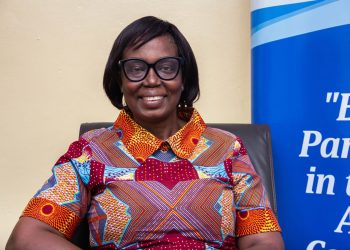
During the panel discussion, moderated by Professor Audrey Gadzekpo, Chief Executive Officer and Founder of Shelter Afrique Ghana Limited, Charles W. N. Dugbartey-Narnor called for wider access to education and digital learning resources to prepare students for an increasingly technology-driven world.
He said Achimota’s founding principles remained relevant but needed to be adapted to changing educational demands, particularly the growing influence of artificial intelligence.
Looking ahead to 2040, Mr. Dugbartey-Narnor said Ghana must equip students with the competencies to compete globally, while ensuring that digital tools and learning resources were accessible to as many learners as possible.
He proposed converting school dormitories into classrooms as one possible way of accommodating more students and expanding access to education.
Using Achimota School as an example, he suggested that its facilities could be reorganised to accommodate a cluster of schools, with separate heads managing different sections while sharing facilities such as playing fields and dining halls.
Although acknowledging that the proposal could generate controversy, he said it deserved consideration as an alternative approach to expanding educational access.
While recognising the social and communal benefits of boarding education, he questioned whether some residential facilities could be put to better use as teaching spaces to serve more students.
He said such an arrangement would, however, require reliable transportation systems, including dedicated school bus lanes, to facilitate students’ daily journeys to and from school.
Mr. Dugbartey-Narnor also called for a national consensus on the future direction of education, supported by clear and sustained commitments to guide reforms towards 2040.
The Founder of The Nefertiti Project, Dr. Nefertiti A. Puplampu, called for stronger quality assurance mechanisms to ensure that efforts to expand access to education did not undermine academic standards.
She said removing financial barriers could enable more people to access education, but increased enrolment must be accompanied by deliberate efforts to maintain and improve the quality of teaching and learning.
Dr. Puplampu stressed that the ultimate objective of education should be to produce graduates capable of contributing meaningfully to Ghana’s development.
She therefore urged policymakers to look beyond enrolment figures and assess whether students were acquiring the knowledge and competencies required to succeed.
Expressing concern about what she described as a tendency to lower academic requirements in the name of expanding access, she distinguished between providing financial support to disadvantaged but academically capable students and reducing the standards required for admission and progression.
She identified literacy and numeracy as fundamental skills, warning that weaknesses in these areas could undermine students’ ability to cope with more advanced academic work.
According to her, some tertiary-level educators faced difficulties teaching students whose foundational knowledge did not adequately prepare them for the demands of their programmes.
She linked the problem to graduate employability, noting that employers often struggled to find graduates who could readily apply their knowledge and skills in the workplace.
Dr. Puplampu called on policymakers and educators to ensure that expanding access was matched by stronger learning outcomes and a deliberate focus on preparing students for productive employment.

For her part, the Founder and Chairman of Alpha Valley School, Gifty Ama Fiagbe, called for education reforms that responded to Ghana’s social and economic needs while preparing learners to meet global demands.
She said reforms must be guided by clearly defined national objectives and a better understanding of the skills required by employers and society.
Ms. Fiagbe also underscored the importance of mentorship in shaping young people’s development, recounting how guidance and an early opportunity to participate in a conference discussion had helped build her confidence and professional growth.
She said the achievements of former students across various fields demonstrated the importance of nurturing young people and creating opportunities for them to realise their potential.
However, she expressed concern that the culture of service and leadership associated with Achimota was not always reflected in the willingness of some former students to support the school.
Drawing on her experience with her year group, she recalled the difficulties encountered in mobilising contributions towards anniversary activities and initiatives to support the school.
She urged former students to demonstrate their commitment through financial contributions, professional services and other forms of assistance.
Ms. Fiagbe further called for deliberate efforts to instil service, leadership and a sense of responsibility in students before they leave school.

OAA President calls for return to holistic education
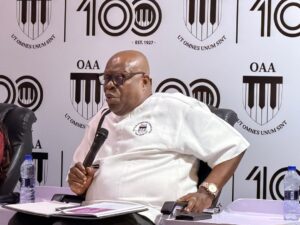
The President of the OAA, Mr Joel Nettey, expressed concern about what he described as a growing disconnect between Ghana’s education system and the country’s cultural values.
He called for a reassessment of the Achimota experiment, which placed emphasis on the holistic development of the child through music, practical skills and technical education.
Mr. Nettey questioned the decision to move away from the earlier educational model in favour of the six-year primary and junior high school structure, arguing that aspects of the Achimota experiment could have been preserved.
He noted that Achimota was not the only institution associated with the model, citing the Ghana Secondary Technical School (GSTS) as another example.
He argued that the model could have been retained in selected institutions while other reforms were introduced across the broader education system.
Mr. Nettey also emphasised the importance of parental responsibility and equal educational opportunities, maintaining that every Ghanaian child deserved the opportunity to access quality education.
- President Commissions 36.5 Million Dollars Hospital In The Tain District
- You Will Not Go Free For Killing An Hard Working MP – Akufo-Addo To MP’s Killer
- I Will Lead You To Victory – Ato Forson Assures NDC Supporters
Visit Our Social Media for More
About Author