1 Introduction
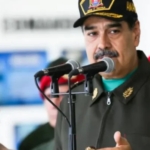
The forcible apprehension of a sitting head of state on foreign soil by another state represents one of the most severe tests of the contemporary international legal order. On 3 January 2026, the United States announced that its forces had captured Venezuelan President Nicolás Maduro during a military operation conducted within the territory of the Bolivarian Republic of Venezuela. President Maduro was subsequently removed from Venezuelan jurisdiction and transported to the United States to face domestic criminal charges relating to terrorism, narcotics trafficking, and weapons offences. The operation reportedly involved coordinated strikes on military installations in and around Caracas and the direct seizure of the Venezuelan Head of State by U.S. special forces.
At the heart of this incident lies a fundamental legal dilemma: whether a state may unilaterally enforce its criminal law through military means within the territory of another sovereign state, particularly where the individual targeted is a sitting head of state. The United States has long maintained that President Maduro was validly indicted under U.S. law and has, since 2019, refused to recognize him as Venezuela’s legitimate leader, citing allegations of electoral manipulation. These positions were relied upon by the Trump administration to justify the operation as a law enforcement action rather than a use of force governed by the jus ad bellum framework.
However, under international law, the sovereignty and territorial integrity of states are protected by Article 2(4) of the United Nations Charter, which prohibits the threat or use of force against the political independence of any state. Closely related is the principle of non-intervention, which bars states from coercively interfering in the internal affairs of another state, including its political leadership. The forcible removal of a sitting president without the consent of the territorial state prima facie raises serious concerns regarding violations of these foundational norms.
The incident also implicates the doctrine of immunity ratione personae, which affords sitting heads of state absolute immunity from foreign criminal jurisdiction under customary international law. While such immunity does not extinguish criminal responsibility, it traditionally bars enforcement action by foreign domestic courts during the individual’s tenure in office. Whether non-recognition of a government or allegations of serious international crimes can lawfully displace this immunity remains a contested and unresolved question in international legal practice.
International reactions to the operation underscore its destabilizing implications. China, Russia, and Iran condemned the action as a violation of Venezuela’s sovereignty and the United Nations Charter, with Russia characterizing it as an act of armed aggression. The European Union expressed concern over the apparent breach of international law, while simultaneously reiterating its doubts regarding the democratic legitimacy of Maduro’s presidency. Latin American responses were deeply divided, reflecting broader regional anxieties about the precedent such unilateral action may set for weaker states.
Beyond its immediate legal consequences, the abduction of President Maduro raises profound systemic questions for international law. It challenges the boundary between law enforcement and armed force, tests the durability of head-of-state immunity, and risks normalizing unilateral coercive measures by powerful states under the guise of criminal accountability. If accepted as lawful, such actions could significantly erode the rules-based international order and weaken the protections afforded to state sovereignty, particularly for politically and economically vulnerable states.
This article critically examines the legality of the United States’ actions under international law and evaluates their broader implications for international legal doctrine and practice. It argues that the characterization of the operation as a law enforcement measure is difficult to reconcile with established principles of the UN Charter, customary international law, and the prohibition of aggression, and that the incident represents a dangerous precedent with far-reaching consequences for global governance.
2. Legality of the Arrest
(a) Prohibition of the Use of Force under Article 2(4) of the UN Charter
The legality of the arrest of President Nicolás Maduro must be assessed primarily against the prohibition on the use of force enshrined in Article 2(4) of the United Nations Charter, which provides that:
“All Members shall refrain in their international relations from the threat or use of force against the territorial integrity or political independence of any State, or in any other manner inconsistent with the Purposes of the United Nations.”
The operation conducted by United States forces within Venezuelan territory, involving military strikes and the forcible seizure of the sitting head of state, constitutes a use of armed force within the meaning of Article 2(4). The International Court of Justice (ICJ) has consistently interpreted “force” broadly to include military operations conducted on the territory of another state without consent, regardless of whether they fall short of full-scale war (Nicaragua v United States, 1986).
Under international law, only two narrowly defined exceptions permit the lawful use of force:
(i) self-defence, individual or collective, under Article 51 of the UN Charter; and
(ii) collective security action authorized by the United Nations Security Council under Chapter VII of the Charter.
In the present case, neither exception appears applicable. The United States did not invoke an armed attack by Venezuela as the basis for self-defence, nor has there been any indication of an imminent or ongoing armed attack attributable to the Venezuelan state that could justify anticipatory self-defence. Furthermore, the operation was not authorized by the Security Council. The unilateral characterization of the action as a “law enforcement operation” cannot displace the jus ad bellum framework, as the use of military force on foreign soil remains subject to Article 2(4) irrespective of the stated purpose.
A relevant practical precedent is the United States’ 1989 invasion of Panama to arrest General Manuel Noriega. Although Noriega had been indicted in U.S. courts on drug trafficking charges, the operation was widely criticized as unlawful under international law, and the UN General Assembly condemned it as a violation of Panama’s sovereignty (GA Resolution 44/240). The Noriega case demonstrates that domestic criminal indictments do not, in themselves, confer a legal right to use force extraterritorially.
Similarly, Israel’s 1960 abduction of Adolf Eichmann from Argentina, while morally compelling to many, was acknowledged by Israel as a violation of Argentine sovereignty. The UN Security Council (Resolution 138 (1960)) affirmed that Argentina’s territorial sovereignty had been breached, underscoring that even the pursuit of individuals accused of grave crimes does not automatically justify unilateral enforcement action.
Accordingly, the arrest of President Maduro by U.S. forces, absent Security Council authorization or a valid claim of self-defence, constitutes a prima facie breach of Article 2(4) of the UN Charter.
(b) Violation of Territorial Sovereignty and the Principle of Non-Intervention
Closely linked to the prohibition of the use of force is the principle of territorial sovereignty, a cornerstone of customary international law. Territorial sovereignty entails a state’s exclusive authority over its territory and population and prohibits other states from exercising enforcement jurisdiction within that territory without consent. The forcible arrest and removal of President Maduro from Venezuelan soil represents a direct infringement of Venezuela’s territorial sovereignty.
The principle of non-intervention, which flows from sovereignty, further prohibits states from intervening in the internal affairs of other states, particularly in matters within their domestic jurisdiction, such as the selection and removal of political leadership. This principle is codified in UN General Assembly Resolution 2131 (XX) (1965), the Declaration on the Inadmissibility of Intervention, which affirms that:
“No State has the right to intervene, directly or indirectly, for any reason whatever, in the internal or external affairs of any other State.”
The International Court of Justice reaffirmed this principle in Nicaragua v United States, holding that intervention is unlawful where it involves coercion in matters in which states are free to decide, including political organization and leadership. The abduction of a sitting president, even where his legitimacy is disputed internationally, constitutes a coercive interference of the highest order.
Another relevant instrument is General Assembly Resolution 2625 (XXV) (1970), the Declaration on Principles of International Law concerning Friendly Relations and Cooperation among States, which emphasizes that no state may use force or other coercive measures to deprive peoples of their right to determine their political system. The forced removal of President Maduro by a foreign military power directly undermines this principle.
In practice, even where states have asserted enforcement jurisdiction abroad, such actions have generally been justified through extradition treaties or cooperation with local authorities, not unilateral military action. The absence of Venezuelan consent, coupled with the use of armed force, distinguishes the Maduro arrest from lawful transnational law enforcement practices.
Taken together, the prohibition of the use of force under Article 2(4), the absence of a valid exception under Article 51 or Security Council authorization, and the violation of Venezuela’s territorial sovereignty and non-intervention obligations strongly suggest that the arrest of President Maduro was unlawful under international law. Past precedents demonstrate that even in cases involving serious international crimes or contested political legitimacy, unilateral extraterritorial enforcement actions remain legally constrained. The present operation, therefore, represents not only a breach of established legal norms but also a troubling expansion of unilateral power with potentially destabilizing consequences for the international legal order.
(c) Head-of-State Immunity under International Law
The arrest and removal of President Nicolás Maduro also raise serious issues concerning head-of-state immunity, a well-established doctrine of customary international law. Sitting heads of state enjoy immunity ratione personae, which is absolute in scope and applies to both official and private acts for the duration of their term in office. This immunity extends to immunity from foreign criminal jurisdiction and, critically, from enforcement measures, including arrest and detention by another state.
The International Court of Justice affirmed this principle in the Arrest Warrant case (Democratic Republic of the Congo v Belgium, 2002), holding that a serving head of state or government, and other high-ranking officials, are immune from arrest and prosecution by foreign national courts, even where allegations concern serious international crimes. The Court emphasized that immunity does not equate to impunity, but rather postpones the exercise of jurisdiction until the individual leaves office or appears before a competent international criminal tribunal.
No recognized exception exists under international law permitting a state to unilaterally disregard head-of-state immunity on the basis of non-recognition of a government. While the United States has refused to recognize President Maduro as Venezuela’s legitimate leader since 2019, recognition is a political act and does not automatically determine the application of immunities under international law. Customary practice suggests that effective control, rather than diplomatic recognition, remains central to the operation of immunity ratione personae.
Historical practice reinforces this position. Even in cases involving egregious allegations, states have generally refrained from arresting sitting heads of state without an international mandate. For example, despite indictments issued by U.S. courts against Fidel Castro and Muammar Gaddafi at various times, no unilateral arrest was attempted while they remained in power. By contrast, the arrest of Slobodan Milošević in 2001 occurred only after he had ceased to be head of state and was conducted by domestic authorities, later followed by surrender to the International Criminal Tribunal for the former Yugoslavia.
Accordingly, the arrest of President Maduro by U.S. forces constitutes a direct violation of immunity ratione personae. Unlike proceedings before international criminal tribunals, such as the International Criminal Court (ICC), where immunities may be lifted under specific treaty frameworks, unilateral enforcement action by a foreign state remains prohibited. The operation therefore undermines a central stabilizing norm of international relations designed to ensure orderly diplomatic engagement and prevent coercive regime change.
(d) Whether the Arrest Constitutes the Crime of Aggression under the Rome Statute
Beyond questions of illegality under the UN Charter, the operation also raises the issue of whether the United States’ actions may amount to the crime of aggression under contemporary international criminal law. Article 8 of the Rome Statute of the International Criminal Court, as amended by the Kampala Amendments (2010), defines the crime of aggression as:
“the planning, preparation, initiation or execution, by a person in a position effectively to exercise control over or to direct the political or military action of a State, of an act of aggression which, by its character, gravity and scale, constitutes a manifest violation of the Charter of the United Nations.”
An “act of aggression” includes the invasion or attack by the armed forces of a State of the territory of another State, as well as any military occupation or use of force inconsistent with the UN Charter. The deployment of U.S. armed forces into Venezuelan territory, the conduct of military strikes, and the forcible seizure of the sitting head of state arguably satisfy the threshold of an act of aggression.
Whether the operation reaches the level of a “manifest violation” depends on its character, gravity, and scale. While the operation may not amount to a full-scale invasion, its character, the use of military force to abduct a head of state, strikes at the core of Venezuela’s political independence. Its gravity is heightened by the targeting of the highest constitutional authority of the state, and its scale, though limited in duration, involved coordinated military action. Taken together, these factors support the argument that the conduct could qualify as a manifest violation of the UN Charter.
It is important to note, however, that the practical application of the crime of aggression in this context is constrained by jurisdictional limitations. The United States is not a party to the Rome Statute, and the ICC may only exercise jurisdiction over the crime of aggression where both the aggressor state and the victim state are parties, or where the UN Security Council refers the situation to the Court. Nonetheless, the absence of jurisdiction does not negate the substantive characterization of the act as aggression under international law.
Historical parallels further illuminate this analysis. The Nuremberg Tribunal characterized aggressive war as “the supreme international crime,” emphasizing that unilateral uses of force undermine the entire legal order. More recently, Russia’s invasion of Ukraine has reinvigorated scholarly and political attention to the crime of aggression, particularly the use of force to undermine another state’s political leadership and sovereignty. While contexts differ, the core principle remains the same: unilateral military force aimed at political coercion is fundamentally incompatible with the UN Charter system.
Accordingly, while jurisdictional and political realities may prevent formal prosecution, the abduction of President Maduro arguably falls within the conceptual framework of the crime of aggression, reinforcing the conclusion that the operation represents not merely an unlawful arrest, but a profound challenge to the contemporary international legal order.
(e) Abuse of the “Law Enforcement” Justification and Extraterritorial Criminal Jurisdiction
A further concern arising from the arrest of President Maduro is the mischaracterisation of a military operation as a law enforcement action. Under international law, transnational criminal enforcement is ordinarily carried out through extradition treaties, mutual legal assistance agreements, or cooperation with local authorities. The unilateral exercise of enforcement jurisdiction within the territory of another state, particularly through the use of armed force, remains strictly prohibited.
The International Court of Justice has consistently drawn a distinction between prescriptive jurisdiction (the authority to legislate and criminalize conduct) and enforcement jurisdiction, which is territorially limited (Lotus Case, 1927; Arrest Warrant, 2002). While a state may assert jurisdiction over certain extraterritorial crimes, it may not enforce that jurisdiction by arresting individuals abroad without consent. The use of military force to execute domestic arrest warrants represents a clear overreach of enforcement jurisdiction.
The United States’ reliance on domestic indictments to justify the operation therefore lacks support in international law. Accepting such a justification would effectively permit powerful states to bypass established extradition regimes and unilaterally seize foreign officials, thereby undermining legal certainty and international cooperation in criminal justice.
(f) Non-Recognition and the Fallacy of “Illegitimacy” as a Legal Basis for Intervention
Another justification advanced by proponents of the operation is the United States’ non-recognition of President Maduro as Venezuela’s legitimate leader. However, non-recognition does not nullify statehood, sovereignty, or the protections afforded under international law. Venezuela remains a sovereign state and a member of the United Nations, irrespective of disputes over the legitimacy of its government.
International law does not recognize a doctrine under which states may lawfully use force or abduct political leaders on the basis of perceived illegitimacy. To the contrary, General Assembly Resolution 2625 (XXV) affirms that all states are entitled to political independence and freedom from external coercion, regardless of their internal political arrangements.
Historical practice confirms this position. Even during periods of contested legitimacy, such as in Afghanistan (1990s), Libya (post-2011), or Haiti (1990s), external intervention has required either Security Council authorization or consent from recognized authorities. Unilateral action based solely on political non-recognition has consistently been regarded as unlawful.
3. Dangerous Precedent and Systemic Implications for International Law
Perhaps the most profound implication of the Maduro arrest lies in the precedent it sets. If accepted as lawful, the operation would erode the distinction between law enforcement and warfare, normalize unilateral regime-change tactics, and weaken the protections afforded to state officials under international law.
Smaller and politically vulnerable states would be disproportionately affected as powerful states could invoke criminal allegations to justify coercive interventions. Such a development would undermine the rules-based international order, replacing legal restraint with power-based discretion. This concern is particularly salient from a Global South and TWAIL perspective, which has long critiqued the selective application of international law against weaker states while shielding powerful actors from accountability.
4. Overall Conclusion
This article has examined the legality of the United States’ arrest and removal of Venezuelan President Nicolás Maduro under international law. The analysis demonstrates that the operation cannot be reconciled with the foundational principles governing the international legal order.
First, the use of U.S. military force within Venezuelan territory constitutes a clear violation of Article 2(4) of the UN Charter, and no valid exception, whether self-defence under Article 51 or Security Council authorization, has been established. Second, the operation breached Venezuela’s territorial sovereignty and violated the principle of non-intervention, as affirmed by long-standing customary international law and authoritative UN General Assembly resolutions. Third, the arrest directly contravened the doctrine of immunity ratione personae, which shields sitting heads of state from foreign arrest and enforcement measures. Fourth, the nature, character, and gravity of the operation place it within the conceptual framework of the crime of aggression, notwithstanding the jurisdictional limits that may preclude formal prosecution.
Arguments seeking to justify the operation on the basis of domestic criminal indictments, non-recognition of President Maduro’s government, or the rebranding of military action as law enforcement are legally unpersuasive. International law does not permit unilateral enforcement jurisdiction through armed force, nor does it allow states to suspend fundamental legal protections on the basis of political disagreement or perceived illegitimacy.
Ultimately, acceptance of such justifications would mark a dangerous departure from the UN Charter system, weakening the prohibition on the use of force and destabilizing the fragile balance between sovereignty and accountability. The arrest of President Maduro therefore represents not a lawful exercise of international justice, but a serious violation of international law with far-reaching implications for global peace, security, and the integrity of the international legal order.
O.K. Seneadza (Prof) Faculty of Law KNUST
Public International Law Expert.
- President Commissions 36.5 Million Dollars Hospital In The Tain District
- You Will Not Go Free For Killing An Hard Working MP – Akufo-Addo To MP’s Killer
- I Will Lead You To Victory – Ato Forson Assures NDC Supporters
Visit Our Social Media for More
About Author