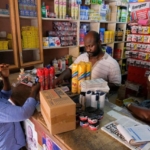
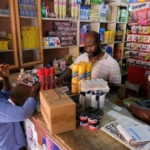
It is deeply unfortunate that Ghana’s system is no longer adequately protecting local businesses. Petty traders, small business owners, and informal retailers are increasingly falling prey to foreign traders who appear to be taking over the Ghanaian market with little restraint. The situation has become alarming.
The time has come for the country to act decisively to regulate these practices. This requires a collective national effort, from the President to the ordinary citizen. Failure to act risks breeding frustration, resentment, and social tension as local business owners continue to pile up grief and pain. As the saying goes, prevention is better than cure.
According to the President of the Ghana Union of Traders Association (GUTA), Dr. Joseph Obeng, foreign businesses now dominate nearly 70 percent of Ghana’s retail market, leaving local traders with just 30 percent. He attributes this trend to the weak enforcement of Ghana’s investment laws, which has allowed foreigners, predominantly Chinese and Nigerians, to gain a strong foothold in the retail space.
“Our market is gone,” Dr. Obeng lamented at a recent public forum. “Today, stationery and printing businesses are largely controlled by Chinese operators. When you visit places like Chinatown and China Mall, you see a constant flow of customers purchasing their goods.”
Major commercial hubs such as Kantamanto and Makola have experienced significant demographic shifts. Foreign merchants, particularly from Nigeria and parts of Asia, have established dominant positions by employing aggressive pricing strategies. Nigerian traders, in particular, have succeeded by leveraging high-volume sales and rapid inventory turnover to undercut Ghanaian competitors.
More troubling is the claim that some of these foreign operators bypass Ghana’s ports, thereby avoiding taxes that should support national development. Others are alleged to exploit transit arrangements and free zone concessions to gain unfair advantages.
Recently, government announced a ban on foreigners participating in Ghana’s local gold trade, effective May 1, as part of reforms aimed at strengthening foreign exchange reserves and stabilising the cedi. The policy also grants exclusive regulatory authority to the newly established Ghana Gold Board (GoldBod) over artisanal and small-scale mining.
Local traders argue that a similar level of boldness is required in the retail sector. They are calling on authorities to clamp down on foreigners operating illegally in retail trade, many of whom are also accused of flouting minimum wage laws and mistreating Ghanaian workers.
A market once reserved for Ghanaians has now become a safe haven for foreign traders, particularly Chinese merchants who flood the space with cheap imports. This trend is gradually pushing Ghanaian traders and manufacturers out of business, rendering many, especially the youth, unemployed. Ultimately, the burden of rising unemployment will fall on the state.
“Our mothers are crying. Our fathers are wailing,” the traders say. The local business sector is shrinking, and unless urgent action is taken, the consequences will be dire. The plea is simple and urgent: a stitch in time saves nine.
- President Commissions 36.5 Million Dollars Hospital In The Tain District
- You Will Not Go Free For Killing An Hard Working MP – Akufo-Addo To MP’s Killer
- I Will Lead You To Victory – Ato Forson Assures NDC Supporters
Visit Our Social Media for More
About Author