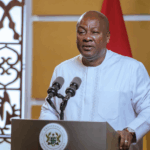
On 7th January 2026, Ghana marks exactly one year since President John Mahama assumed office amid high public expectations and widespread scepticism.
President Mahama’s political journey is unique and unparalleled in Ghana’s Fourth Republic. He has served in almost every major political position—Member of Parliament, Deputy Minister, Minister of State, Vice President, President by constitutional succession, President by election, and now a comeback President. This trajectory comes with immense political and governance experience. Importantly, he is the only former President who spent a significant period outside power, providing him the rare opportunity to reflect, learn from political setbacks, and confront the harsh labelling that often accompanies public leadership.
His return to office is therefore historic, with profound implications for Ghana’s democracy. If successful, democracy is strengthened and vindicated; if unsuccessful, it raises difficult questions about democratic choice. Against this backdrop, and as President Mahama marks his first major milestone with relatively high approval ratings, it is timely to critically examine his governance style and draw lessons that can help shape a stronger governance model for future leaders.
This exercise is important for two reasons. First, it helps clarify what good governance means within Ghana’s own context rather than in abstract terms. Second, it equips citizens with practical insights to make informed judgments when choosing leaders in future elections.
In this article, I characterise President Mahama’s governance style based on personal observations, traditional and social media commentary, and public sentiments documented during his first year in office. I also reflect on the impact of his leadership on ordinary Ghanaians and the business community, and highlight key lessons for governance in Ghana.
Achievements
Some signalling achievements have been made in the First Year. One of the most visible outcomes of President Mahama’s first year is the improvement in the economic lives of ordinary Ghanaians. Inflation has declined significantly, with direct effects on the prices of goods and services. The unprecedented strengthening of the Ghana cedi has improved business confidence and transactions. These gains reflect prudent economic and financial management.
Equally important is the reduction in national indebtedness through deliberate policy interventions, including the establishment of the Gold Board to directly link Ghana’s gold resources to national development. Beyond these headline indicators, several other economic measures under his administration point to a renewed sense of economic direction.
On the social front, the enhancement of social interventions has brought considerable relief. The “no-stress” fee policy has eased the burden on first-year tertiary students and their families. Improvements in the Free Senior High School programme, which evident in the absence of public outcry over food quality, congestion, double tracking, and unpredictable academic calendars, signal better management.
The release of funds to District Assemblies and the National Health Insurance Scheme is making a tangible difference at the local level and in healthcare delivery. Although large-scale employment creation is still unfolding, policy initiatives such as the 24-Hour Economy and “Nkɔkɔ Nkitikiti” have renewed optimism among the youth and job seekers. This reassurance matters.
In the governance space, President Mahama’s reset of governance and civic relations is remarkable. Public trust has been renewed, accountability strengthened, and citizen participation deepened without fear. Freedom of expression is visibly guaranteed. This renewed confidence explains why some voices on social media, even if misguided, have called for a third term, contrary to the 1992 Constitution. While such calls are unconstitutional, they highlight one reality: trust in democracy is built by leadership, not by chance. This is democratic governance in action: government for the people and by the people.
Characterising the Mahama Governance Style
First, President Mahama’s extensive political and governance experience has translated into high self-efficacy in office. He demonstrates deep understanding not only of politics but across multiple governance domains. His ability to discuss economic and financial issues often rivals that of seasoned professionals, impressing even academics in economics, finance, and accounting. This competence is equally evident in areas such as sports, communication, defence, international diplomacy, agriculture, infrastructure, and health. After one year, this multidimensional grasp of governance is evident to discerning observers across the political divide.
Second, the Mahama Governance is characterised by competency-based appointments. Appointments present every leader with a difficult choice: politics or competence. When politics dominates, service delivery suffers; when competence prevails, results improve but political costs may arise. President Mahama appears to have deliberately prioritised competence. His appointments reflect an effort to place round pegs in round holes.
More importantly, many appointees combine political astuteness with strong technical expertise. A clear example is the Chief Executive Officer of the Gold Board, an accomplished politician and an effective technocrat, whose results have made the institution a national reference point. Similar patterns are evident in Finance, Foreign Affairs, Communications, Energy, Roads and Transport, and Education. These outcomes are the result of deliberate presidential choice.
Thirdly, President Mahama has been intentional about building social and political cohesion. His leadership style makes citizens—regardless of political affiliation—feel included. He communicates simply and relates naturally with ordinary people. Notably, President Mahama has avoided naming or blaming the immediate past government. Instead, he refers to “past governments” or “successive governments.”. This approach lowers political tension, reduces opposition hostility, and strengthens national cohesion, an essential foundation for development.
Fourth, the Mahama administration stands out as anti-corruption in both words and deeds. During his first year, President Mahama’s government has been marked by relative calm in corruption-related matters. Ghanaians have not witnessed any major corruption scandal. This may not imply perfection, but it reflects clear ethical direction from the top. The President has consistently communicated his commitment to accountability and backed it with action. The introduction of a Code of Conduct for Public Office Holders further reinforces this commitment.
Fifth, President Mahama’s governance can best be described as open and listening, rather than “we know it all.” His administration has held numerous stakeholder consultations, including economic forums, education dialogues, and engagements with civil society on illegal mining. In some instances, government proposals have been withdrawn or revised in response to public concern. This openness to listening, learning, and reforming policies in the public interest is a hallmark of democratic governance.
Sixth, Prudence is a defining feature of President Mahama’s governance style. The appointment of only 58 ministers and deputy ministers, the lowest in the Fourth Republic, signals fiscal restraint. Cost-saving reforms to Independence Day celebrations further demonstrate this commitment. The reduction in presidential convoys and visible displays of opulence also communicates simplicity and humility. These symbolic actions build trust and reinforce the message that leadership exists to serve, not to dominate.
Again, Governance under President Mahama has been characterised by improved transparency and accountability. Citizens are regularly informed about policy decisions and implementation. Ministers hold accountability sessions, and even the Ministry of Justice and Attorney-General provide public updates on legal proceedings. While this openness attracts some criticism, the broader public response has been positive, with many appreciating the culture of accountability.
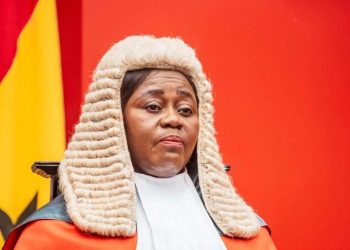
Lastly, respect for the rule of law. Since assuming office, President Mahama has demonstrated consistent respect for the rule of law. Even in handling complex constitutional matters, including the removal of the Chief Justice, his actions have remained within legal and institutional boundaries. This respect reduces tension, curbs abuse of discretion, and strengthens democratic stability.
Governance Lessons from President Mahama’s First Year
President Mahama’s leadership demonstrates that Ghana can experience meaningful socio-economic improvement when the right governance is in place. Development, ultimately, begins and ends with leadership.
First, good governance depends on the self-efficacy of the leader. Political skill alone is not enough; leaders must understand governance challenges broadly and provide clear direction. Ghanaian voters must therefore elect leaders who demonstrate competence beyond political rhetoric.
Second, the Mahama model shows that competence must supersede political activism in appointments. Political parties should deliberately invest in developing the professional capacities of their members to improve governance outcomes.
Third, social and political cohesion is essential. Divisiveness, ethnicism, and excessive blame undermine governance. Citizens must scrutinise candidates’ attitudes toward inclusion and unity.
Fourth, open and listening governance matters. Governments that refuse to listen lose public support. Voters should favour leaders who demonstrate openness to learning and dissent.
Finally, good governance rests on prudence, transparency, accountability, and respect for the rule of law—principles clearly reflected in President Mahama’s first year.
Conclusion
President Mahama’s first year in office has not only improved aspects of Ghanaian life but has also enriched governance practice in Ghana. It has renewed hope in democracy. Governance is not merely a theory found in textbooks; it is an action observed in leadership.
About the Writer
Dr Redeemer Krah is a scholar in accounting and public sector governance and a strong advocate for democracy. He is a Senior Lecturer in Accounting at the University of Professional Studies, Accra and a consultant in public financial management and governance. He holds a PhD in Accounting from the Netherlands and a second PhD in Public Administration, Governance and Leadership from the Ghana Institute of Management and Public Administration. He also obtained an MPhil in Accounting and a BSc in Administration (Accounting) from the University of Ghana Business School, and is a Fellow of the Institute of Chartered Accountants Ghana.
- President Commissions 36.5 Million Dollars Hospital In The Tain District
- You Will Not Go Free For Killing An Hard Working MP – Akufo-Addo To MP’s Killer
- I Will Lead You To Victory – Ato Forson Assures NDC Supporters
Visit Our Social Media for More
About Author