Nine forest reserves have been rescued from the control of illegal miners as general improvement in the fight against illegal mining in the country is recorded in forest reserves, according to the Forestry Commission.
The commission, however, maintains that more work remains to be done to save the country’s 288 forest reserves from destruction.
As of January 30 this year, 44 forest reserves were impacted by illegal mining, with nine of them designated as red zones, 13 marked orange, 18 flagged yellow, and four declared green zones.
However, the latest figures by the Forestry Commission revealed that as of December 15 this year, there were no longer forest reserves in the red zone category, while the orange zone had also reduced from 13 to 10.
The figures also showed that 29 forest reserves are in the yellow category, while 11 fall within the green zone.
Categorisation
Per the commission’s categorisation of forest reserves by prevalence of galamsey, red zones have active illegal mining sites that are difficult to control because of large numbers of armed and violent galamsey operators, while the orange zone has frequent incursions by a large number of illegal miners, usually with excavators, requiring continuous surveillance and monitoring.
Forest reserves under the yellow category have moderate illegal mining activities, with generally non-violent galamsey operators who can be effectively dislodged by the rapid response team.
The green forest reserves refer to where the illegal mining situation is generally under control by the Forestry Services Division’s local management.
Positive outlook
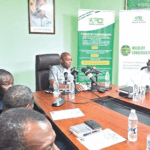
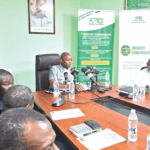
The Chief Executive of the Forestry Commission, Dr Hugh Brown, told the Daily Graphic that the current state of affairs was a giant step forward towards salvaging forest reserves from illegal miners.
Particularly, he stressed that it took a lot of work to gain control of the nine forest reserves that had been completely taken over by illegal miners.
“The fight has not been easy; areas cleared of illegal miners sometimes experience a resurgence, thus requiring us to re-strategise, mobilise, and deal with the situation.
The efforts of our gallant Forestry Commission frontline teams, the police, and especially the military have been remarkable and should be applauded,” he said.
Dr Brown said the commission remained determined to go to every length to rid the forest reserves of galamsey.
“I can say with certainty that, as far as illegal mining operations within forest reserves are concerned, we are in a much better situation today than we were at the beginning of the year. But we cannot be complacent; we need to stay focused, vigilant, and resolute,” he stressed.
Dr Brown revealed that 199 excavators were seized in forest reserves within the year, together with 21 vehicles, four bulldozers, 227 pumping machines, 69 motorbikes, 13 tricycles, 28 gold detector machines, and 13 heavy-duty generators.
He said the Forestry Commission, through the High Court, had secured formal confiscation of 158 excavators, two bulldozers, and 16 vehicles out of the seized equipment to the state, while other seized items were being taken through the court system for formal confiscation.
He added that 453 suspects arrested for mining in forest reserves were being prosecuted.
Low prosecutions
Statistics at the Forestry Commission revealed that within the past three years, the security operatives, comprising the Rapid Response Team of the commission, the military, and the police, have jointly arrested 1,298 persons for mining in forest reserves across the country.
Out of that number, only 35 have been successfully prosecuted, the figure representing just 2.7 percent of the total arrests made over the years.
A breakdown of the figures showed that of the 218 illegal miners that were arrested in 2023, only 24 have so far been prosecuted, while just 11 of the 627 persons arrested in 2024 have also been successfully prosecuted.
The figures further show that all 453 persons arrested for illegal mining in forest reserves were yet to be successfully prosecuted as of December 15, 2025.
Dr Brown said the development was disappointing as it did not send a strong signal that galamsey in forest reserves would not be countenanced.
To reverse the trend, he stressed the need for the judiciary to treat illegal mining cases with utmost priority to ensure speedy prosecution.
He further underscored the need for the government to fast-track processes for the establishment of the district tribunals and the creation of special courts to be solely responsible for galamsey cases.
Other challenges
Dr Brown said despite the modest gains made in the fight against illegal mining, the Forestry Commission was confronted with major challenges, key among them the staffing gap of about 2,000.
He said the commission was faced with inadequate logistical support for field operations, particularly vehicles, motorbikes, drones, increasing impunity, violence, and assault on the field staff of the commission by armed illegal operators within forest reserves.
- President Commissions 36.5 Million Dollars Hospital In The Tain District
- You Will Not Go Free For Killing An Hard Working MP – Akufo-Addo To MP’s Killer
- I Will Lead You To Victory – Ato Forson Assures NDC Supporters
Visit Our Social Media for More
About Author