The 2026 Budget arrives at a time when Ghana faces high levels of inequality and growing pressure on public services. For this reason, the budget’s renewed emphasis on social protection deserves attention.
It reports that spending on core social protection programmes increased from 0.6 percent of GDP in 2024 to 0.9 percent in 2025.
This represents a meaningful improvement after many years of low investment. The budget also confirms continued support for programmes such as LEAP, the School Feeding Programme, the Capitation Grant and the National Health Insurance Scheme.
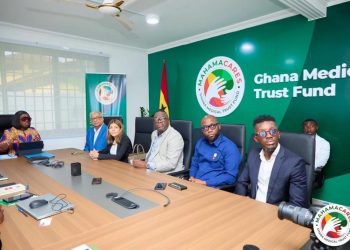
New measures such as the distribution of free sanitary pads, free tertiary education for persons with disabilities and the launch of MahamaCares indicate attempts to widen access to essential services.
Yet a closer look shows that Ghana continues to face stubborn weaknesses in how these programmes are designed and delivered. Spending has increased, but it is still modest when measured against national needs and remains far below global benchmarks.
Large numbers of extremely poor households remain outside the social protection net, and persistent implementation failures, especially in targeting accuracy, timeliness of payments, and transparency, continue to reduce the impact of public investments.
Underlying all these issues is Ghana’s broader political context. Competitive clientelism continues to shape policy choices, incentivising visible spending over the less glamorous but essential work of building institutions, strengthening monitoring systems, improving data, and ensuring predictable funding flows.
This political logic explains why targeting errors persist, why monitoring systems remain weak, and why delays in payments continue despite repeated commitments to reform.
The newly passed social protection law creates a rare opportunity to break from this pattern, but only if implementation is shielded from political interference and backed by a clear roadmap, adequate financing, and professionalised social welfare institutions.

Budget allocations reflect both progress and persistent challenges. Funding allocation to LEAP is projected to rise by roughly 11 percent and government plans to expand coverage to 400,000 households by March 2026.
This is welcome progress, especially when compared to the 98th payment cycle in October 2025, which supported 350,580 households. However, even at 400,000 households, well over a million extremely poor Ghanaians would remain unserved.
Compounding this, LEAP payments continue to suffer from severe delays: between January 2023 and December 2024, only one out of twelve scheduled cycles was paid on time, and none of the six 2024 cycles met the expected schedule, according to recent analysis by UNICEF.
Irregular payments undermine the purpose of cash transfers, especially in a high inflation environment where the real value of grants erodes quickly.
Free SHS continues to absorb a large share of education resources, increasing from GHC3.5 billion in 2025 to GHC4.2 billion in the 2026 budget. This is about twenty seven times the amount allocated to the Capitation Grant. However, this comparison should not be interpreted to mean that basic education has been neglected.
The uncapping of GETFund is expected to make additional resources available for basic level infrastructure and service delivery, depending on how these resources are channelled. The real issue is how the entire education financing framework can support a more balanced approach that strengthens foundational learning while sustaining progress at the secondary level.
The School Feeding Programme continues to expand, with new directives requiring schools to procure Ghana-produced rice, maize, chicken and eggs. This shift has the potential to strengthen local agricultural markets and deepen the programme’s impact on rural livelihoods.
However, without clear enforcement mechanisms and routine monitoring, past problems with non-compliance and weak local procurement are likely to continue.
The free sanitary pads initiative responds to a well recognised barrier facing many girls. Yet important implementation weaknesses remain. There is limited public information on who qualifies, how distribution is monitored and whether supplies reach girls consistently and in adequate quantities.
Without clear eligibility rules, transparent allocation formulas, predictable supply chains, and regular reporting, the programme may fail to reach those who need it most. Strengthening these systems is essential if the initiative is to deliver meaningful and equitable benefits.
MahamaCares is another major policy signal, especially in the treatment of chronic diseases. Its intention to guarantee care regardless of income or location is a major step toward equity. Framing the management of non communicable diseases as a right, rather than a privilege, represents an important shift in Ghana’s social policy landscape.
However, financing will be critical. If substantial resources are drawn from the NHIS to finance MahamaCares, it could place additional pressure on a system that is already struggling to meet rising healthcare demands.
Sustaining MahamaCares will therefore require diversified funding sources, better diagnostic capacity across regions and stronger investments in prevention.

A major structural reform in the budget is the new Value for Money Bill, which is positioned as a tool to ensure efficiency in public spending. If well designed, it could help improve procurement, reduce waste, and strengthen accountability. But caution is essential.
Cost-saving measures that focus narrowly on efficiency can unintentionally disadvantage remote districts, smaller schools, or vulnerable populations whose service delivery is inherently more expensive. A value-for-money framework that does not place equity at its centre risks rewarding programmes that are cheaper to deliver rather than those that are most needed.
The challenge will be to strike a balance: promote efficiency, but never at the expense of access, fairness, or the protection of high-need communities.
The 2026 Budget signals progress and renewed attention to social protection. What will matter most in 2026 is whether government can match political commitments with administrative discipline: timely payments, transparent rules, credible monitoring, stronger coordination, and a firm prioritisation of equity across all programmes.
Social protection is ultimately about fairness, about ensuring that every Ghanaian, regardless of where they live or how much they earn, has access to the basic support needed for a dignified life. This budget moves Ghana in the right direction; the challenge now is to deliver.
- President Commissions 36.5 Million Dollars Hospital In The Tain District
- You Will Not Go Free For Killing An Hard Working MP – Akufo-Addo To MP’s Killer
- I Will Lead You To Victory – Ato Forson Assures NDC Supporters
Visit Our Social Media for More
About Author